






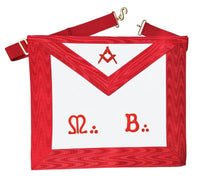
Masonic Lodge Officers: Roles, Functions, and Traditions
For a Masonic lodge to function harmoniously, it requires more than committed members and well-conducted rituals. It also relies upon a carefully organised structure entrusted to its lodge officers. From the Worshipful Master, who presides over the proceedings, to the Secretary, who preserves the lodge’s records and history, and from the Wardens to the Almoner and the Expert, each officer fulfils a specific responsibility in service of the lodge. But who exactly are these lodge officers? Where do their offices originate, and why do their duties sometimes differ from one rite or jurisdiction to another? To understand how a lodge operates, it is first necessary to explore the essential role of its lodge officers.
- 1. What Are Lodge Officers?
- 2. The Origins of Lodge Officers in the History of Freemasonry
- 3. The Fundamental Offices of Modern Freemasonry
- 4. Lodge Officers in Anglo-Saxon Freemasonry
- 5. Lodge Officers in France and Continental Europe
- 6. How Does One Become a Lodge Officer?
- Conclusion – Lodge Officers
- FAQ – Masonic Lodge officers
- Podcast – Lodge Officers: Roles, Functions and Traditions
1. What Are Lodge Officers?
Every organised society depends upon individuals entrusted with specific responsibilities to ensure its smooth operation. Freemasonry is no different. Lodge officers are the Brethren or Sisters who hold particular offices within the lodge for a defined period, each carrying distinct duties and responsibilities.
The word “officer” can sometimes puzzle non-Masons and even some Freemasons. In modern usage, it is often associated with the military. Its original meaning is far broader. The term derives from the word “office”, meaning a duty, charge or function entrusted to an individual. A lodge officer is therefore, in the simplest sense, someone appointed or elected to fulfil a particular office.
It is equally important to distinguish between a degree and an office. A degree reflects a Mason’s progress through the initiatic system. An office, by contrast, is a responsibility undertaken for a limited term. Two Master Masons may therefore share the same degree while serving the lodge in very different capacities.
Lodge officers perform a wide range of duties. Some are responsible for the administration of the lodge, such as the Secretary and Treasurer. Others oversee the proper conduct of ceremonies, including the Director of Ceremonies and the Expert. Still others embody key aspects of Masonic life, particularly instruction, fraternity and charitable care.
Together, these officers form what is commonly known as the officer corps. Under the authority of the Worshipful Master, it serves as the lodge’s governing body. It prepares meetings, organises ceremonies, ensures that regulations are observed and helps maintain the continuity of lodge life.
While titles and specific responsibilities may differ according to rites, obediences and jurisdictions, the existence of an officer corps remains one of the defining characteristics of Freemasonry throughout the world.
2. The Origins of Lodge Officers in the History of Freemasonry
2.1 Operative Masons’ Guilds
The origins of lodge officers can be traced back to the ancient guilds of builders from which modern Freemasonry inherited many of its organisational forms.
Operative masons worked within structured communities responsible not only for overseeing building projects, but also for dealing with disciplinary matters, finances and charitable support. Such organisations required individuals entrusted with specific and enduring responsibilities.
Although the surviving sources are fragmentary, they reveal the existence of several early offices. In Scotland, towards the end of the seventeenth century, the head of a lodge generally held the title of Warden and was assisted by one or more Deacons. The oldest known Scottish Masonic ritual, the Edinburgh Register House Manuscript of 1696, refers to a Master, a Warden and a Fellow of Craft.
The precise composition of these early structures remains difficult to establish. It is nevertheless clear that certain functions were already present, including leadership of the guild, supervision of work, reception of members and mutual assistance. Administrative duties were often carried out by clerks attached to the craft, as many working masons were unable to read or write.
The admission ceremonies of this period remain imperfectly understood. As a result, it is impossible to determine exactly how many officers took part in these early rites.
2.2 The Emergence of Offices in Modern Freemasonry
The rise of speculative Freemasonry during the eighteenth century brought about a profound transformation of these functions.
Lodges were no longer professional bodies responsible for managing building sites. They became initiatic societies, bringing together men from diverse backgrounds around shared moral and symbolic ideals. New responsibilities emerged to meet the growing needs of ritual practice, instruction and fraternal life.
Gradually, certain offices became established across almost all Masonic jurisdictions. The Worshipful Master presided over the proceedings. The Wardens supervised the columns and contributed to the instruction of members. The Secretary maintained the records. The Treasurer managed the finances. The Almoner oversaw charitable and welfare activities.
From this common foundation, each Masonic tradition developed its own customs. Anglo-Saxon jurisdictions gradually created a large number of specialised offices, while Continental rites generally favoured more compact structures.
This evolution explains why the functions of Masonic officers display both remarkable historical continuity and considerable diversity across the Masonic world today.

Masonic officer jewels representing the various offices exercised within a lodge.
2.3 Why Do Officers Occupy Specific Places in the Lodge?
The duties of lodge officers are not merely administrative or ceremonial. They are also embedded within a symbolic geography unique to each rite.
In every tradition, the Worshipful Master sits in the East, the symbolic source of light. From this position, he directs the proceedings and safeguards the harmony of the lodge. Several important officers are seated near him. The Secretary occupies a place in the East, to the right of the Worshipful Master, reflecting his role as custodian of the lodge’s administrative memory. In rites that include the office, the Orator is likewise seated in the East, where he ensures compliance with regulations and delivers the conclusions or addresses prescribed by custom. The Treasurer is generally seated nearby, often close to the Secretary.
The position of the Wardens varies more significantly according to ritual tradition. In rites of the modern family, such as the French Rite and the Rectified Scottish Rite, both Wardens are seated in the West. In rites of the ancient family, including the Ancient Accepted Scottish Rite and most Anglo-Saxon traditions, the Senior Warden occupies the West while the Junior Warden is seated in the South.
These distinctions are far more than matters of layout or furniture. They reflect different ritual conceptions concerning the circulation of authority, the supervision of the columns and the symbolic organisation of the lodge room. Each rite develops its own internal geography, in which offices derive meaning not only from their duties but also from their location within the lodge.
3. The Fundamental Offices of Modern Freemasonry
3.1 The Offices Essentialr to the Functioning of a Lodge
From the eighteenth century onwards, modern Freemasonry gradually established a number of offices that, although sometimes known by different titles, are found throughout the Masonic world. These offices fulfil the essential needs of every lodge: directing its proceedings, administering its affairs, managing its resources, fostering fraternal support and ensuring the security of its ceremonies.
Foremost among them is the office of Worshipful Master. He presides over the lodge, directs its proceedings and represents it before the obedience or jurisdiction to which it belongs. He is assisted by two Wardens, whose responsibilities include helping to conduct the work of the lodge and contributing to the instruction of its members.
The Secretary is responsible for the administrative life of the lodge. He records the minutes, preserves the archives and manages correspondence. Alongside him, the Treasurer oversees the lodge’s finances and presents regular reports on its accounts to the membership.
Fraternal welfare and charitable support are traditionally entrusted to the Almoner. His role is to assist members in difficulty and to coordinate the charitable activities of the lodge.
Finally, the protection of the proceedings is entrusted to one or two officers, depending upon the tradition. In Continental rites, this responsibility is generally carried out by an Inner Guard, often known as the Coverer, who is stationed within the lodge room. In Anglo-Saxon traditions, there is in addition an Outer Guard, usually called the Tyler, whose duty is to supervise access to the lodge from outside. Depending upon the rite or jurisdiction, these offices may also be known by other titles, such as Sentinel or Inner Guard. Their shared purpose is to ensure that the proceedings may take place free from intrusion or disruption.
Together, these offices form the common foundation of Masonic organisation. They provide the administrative and practical framework upon which the life of the lodge depends, regardless of the particular customs of any given rite.
3.2 From Governing Body to Ritual Officers
Apart from those officers responsible for guarding the lodge, whose duties are closely linked to ceremonial practice, the fundamental offices form a kind of governing body responsible for the administration and day-to-day management of the lodge.
As speculative Freemasonry evolved, however, its ceremonies became increasingly sophisticated. Welcoming visitors, guiding candidates, transmitting instructions, maintaining protocol and organising banquets all created the need for additional responsibilities.
As a result, a wide range of specialised offices gradually emerged and assumed growing importance. Deacons, Stewards, the Director of Ceremonies and the Chaplain became prominent features of Anglo-Saxon Freemasonry. On the European continent, offices such as the Orator, the Expert and the Director of Ceremonies developed their own distinctive roles.
Today, these ritual offices vary considerably from one country, rite and obedience to another. They remain among the clearest expressions of the rich diversity that characterises contemporary Masonic traditions.
4. Lodge Officers in Anglo-Saxon Freemasonry
The Masonic jurisdictions of England, Scotland, Ireland and North America have developed a particularly extensive range of specialised offices. This evolution reflects the importance traditionally attached to ceremony, protocol and ritual transmission within Anglo-Saxon Freemasonry. Whereas Continental traditions have often favoured relatively compact officer corps, Anglo-Saxon lodges gradually distributed responsibilities among a larger number of Brethren, each entrusted with a clearly defined role.
Some of these offices descend directly from the earliest practices of eighteenth-century speculative Freemasonry. Others emerged later in response to the growing needs of lodge life, particularly in the areas of instruction, music, charity and ceremonial protocol.
4.1 The Immediate Past Master
The Immediate Past Master is the Worshipful Master who has most recently completed his term of office. Within Anglo-Saxon Freemasonry, he occupies a position of considerable importance, as his experience is regarded as a valuable resource for the lodge.
His principal responsibility is to advise his successor and help ensure continuity in the governance of the lodge. In some jurisdictions, he may deputise for the Worshipful Master when required and take part in specific ceremonial duties.
Although the office is often honorary in Continental Europe when it exists at all, it remains a fully active and respected position throughout much of the Anglo-Saxon Masonic world.
4.2 The Chaplain
The Chaplain is responsible for the prayers offered during ceremonies and for saying grace at Masonic banquets and festive boards.
Contrary to a common assumption, he is not necessarily a clergyman. His purpose is less to represent a particular faith than to give expression to the spiritual dimension of Freemasonry. In some lodges, the office is performed by the Immediate Past Master.
The continued presence of the Chaplain reflects the importance that many Anglo-Saxon traditions still attach to religious references within Masonic practice.
4.3 The Deacons
The Deacons are among the most distinctive officers of Anglo-Saxon Freemasonry. There are generally two of them: the Senior Deacon and the Junior Deacon.
The Senior Deacon conveys the instructions of the Worshipful Master to the Senior Warden, while the Junior Deacon passes those of the Senior Warden to the Junior Warden. This role as a living link between the principal officers explains the traditional wands carried by Deacons during ceremonies.
Their most visible duty, however, is the guidance of candidates during initiation ceremonies. They accompany candidates throughout the ritual, direct their movements and help ensure the smooth progression of each stage of the ceremony.
In many respects, the Deacons perform functions that are divided between the Expert and the Director of Ceremonies in Continental traditions.
4.4 The Stewards
Stewards are usually appointed in pairs, although larger lodges may have several.
They assist the Deacons during ceremonies and may act in their place when necessary. Their responsibilities are closely associated with Masonic banquets and festive boards, for which they provide much of the practical organisation.
Within British traditions, Stewards play a particularly important role in serving wine during ritual toasts and ensuring the smooth running of communal meals. Their office is often regarded as an introduction to the responsibilities associated with service within the officer corps.
4.5 The Director of Ceremonies and the Marshal
The Director of Ceremonies is responsible for the proper conduct of the ritual. He oversees the smooth flow of ceremonies, coordinates the movements of officers and formally introduces visitors into the lodge.
Where rituals are performed from memory, he may also discreetly assist officers who momentarily lose their place.
In Scotland and the United States, the office of Marshal also exists. Although some of its duties overlap with those of the Director of Ceremonies, the Marshal is particularly concerned with protocol and the reception of visitors. In the United States, he frequently performs specific duties during ceremonies involving the national flag and the Pledge of Allegiance.
4.6 Other Anglo-Saxon Offices
Alongside these principal offices are numerous additional functions whose importance varies from one jurisdiction to another.
The Superintendent of the Works, sometimes known as the Architect, is responsible for the material preparation of ceremonies and the care of ritual equipment. The Organist, Director of Music or Musician oversees the musical elements of lodge ceremonies. Some lodges also appoint an Orator, whose responsibilities include safeguarding Masonic law and delivering certain formal addresses.
Other offices are even more specialised. The Mentor assists newer members in their Masonic development. The Archivist or Librarian preserves the lodge’s records and historical collections. The Charity Steward encourages charitable giving and coordinates fundraising efforts on behalf of causes supported by the lodge.
Certain jurisdictions, particularly in Scotland, also maintain more distinctive offices such as the Standard Bearer, Bible Bearer, Bard and even the Bagpiper.
This remarkable variety reflects the richness of Anglo-Saxon Masonic traditions. Depending on local customs and jurisdictional practice, a lodge may have anywhere from fifteen to thirty officers. Scottish officer corps are generally among the most extensive in the Masonic world.
5. Lodge Officers in France and Continental Europe
The rites practised in France and throughout much of Continental Europe followed a different course from that of the Anglo-Saxon world. While the fundamental offices common to all Freemasonry remained in place, the development of ritual functions took a distinct direction, characterised by the prominence of officers such as the Orator, the Director of Ceremonies and the Expert.
In theory, each rite defines its own officer corps. The French Rite, the Ancient and Accepted Scottish Rite and the Rectified Scottish Rite do not provide exactly the same offices, nor do they distribute responsibilities in precisely the same manner. In practice, however, these traditions gradually moved closer together, and many lodges today operate with broadly similar structures.

Masonic lodge prepared for a meeting, where each officer’s station corresponds to a specific function.
5.1 The Orator
The office of Orator is perhaps the clearest distinction between Continental Freemasonry and Anglo-Saxon practice.
The Orator is responsible for ensuring compliance with the constitutions, regulations and customs of both the lodge and the obedience. In many rites, he alone may rise to remind the lodge of a rule or point out an irregularity in the conduct of the proceedings.
His role extends far beyond this supervisory function. He is also responsible for delivering the conclusions of debates, initiation addresses, speeches given during solstitial celebrations and other formal occasions. In some lodges, he regularly presents papers or commentaries intended to illuminate the work of the lodge.
Unlike his Anglo-Saxon counterpart, where such an office exists, the Continental Orator often exercises genuine institutional authority within the officer corps.
5.2 The Director of Ceremonies
The Director of Ceremonies is the lodge’s principal moving officer.
Once the proceedings have been opened, movement within the lodge generally takes place under his direction. He introduces visitors, escorts official delegations and ensures the proper conduct of ritual processions.
In many traditions, he is also responsible for preparing the lodge room before proceedings begin. He may arrange ritual objects, unroll the lodge tracing board, light the symbolic lights or prepare the Volume of the Sacred Law.
His duties bear certain similarities to those of the Anglo-Saxon Director of Ceremonies, although the distribution of responsibilities often differs from one rite to another.
5.3 The Expert
The Expert is primarily responsible for guiding candidates during initiation ceremonies.
He ensures the regularity of initiations, prepares the ordeals prescribed by the ritual and accompanies candidates throughout their ceremonial journey. In many lodges, he is also regarded as the principal authority on ritual and is responsible for ensuring its correct execution.
This office has evolved considerably over time. In the early French Rite, the Expert was not necessarily a permanent officer and could be appointed specifically for a particular ceremony. In the earliest rituals of the Ancient and Accepted Scottish Rite, there were even two Experts, directly inspired by the Deacons of Anglo-Saxon Freemasonry.
Today, most lodges have only one Expert. Depending upon the rite, he may exercise extensive responsibilities and occupy a particularly important place in the preparation and conduct of ceremonies.
5.4 Offices That Have Disappeared or Become Less Common
Some offices that were once widespread have gradually disappeared or become uncommon.
The Keeper of the Seals was responsible for safeguarding the lodge seal and archives. In most lodges, these duties have long since been absorbed by the Secretary.
The Terrible Brother occupied a distinctive place in certain French lodges. Responsible both for guarding the lodge and introducing candidates, he sometimes administered preparatory ordeals before initiation. This office has now largely fallen into disuse.
The Standard Bearer and Sword Bearer have likewise disappeared from many lodges, although they remain present during certain national ceremonies and within a small number of jurisdictions.
Other offices, by contrast, remain very much alive but are associated with particular rites rather than with Continental Freemasonry as a whole. This is notably the case with the Architect-Preparator in the Traditional French Rite and the Économe in the Rectified Scottish Rite. Both are responsible for the equipment required for ceremonies and oversee the practical preparation of the lodge room before proceedings begin.
5.5 Additional Functions
Alongside the most widespread offices, a number of complementary functions continue to exist.
The Master of Banquets organises festive boards and ritual banquets where these traditions are maintained. The Master of Harmony is responsible for the musical accompaniment of ceremonies.
Some lodges also appoint an Archivist or Librarian responsible for preserving historical documents and managing the lodge’s collections.
In Switzerland, certain lodges make use of the office of Magister, who is responsible for the instruction of Entered Apprentices and Fellowcrafts. This duty, normally entrusted elsewhere to the Wardens, bears some resemblance to that of the Mentor in English Freemasonry.
During the twentieth century, Continental practice tended towards greater uniformity. Although each rite retained its own particular character, many lodges gradually adopted broadly similar models in the composition of their officer corps.
Several Masonic authors also sought to establish symbolic correspondences between the officer corps and the Kabbalistic Tree of Sephiroth. This interpretation helped popularise the idea of an officer corps composed of ten principal officers, including the Worshipful Master. Around this core, however, continue to revolve a number of complementary offices whose importance varies according to rites, obediences and local traditions.
6. How Does One Become a Lodge Officer?
6.1 From Appointment to Election
The process by which Freemasons gain access to office has evolved considerably over time. Under the Ancien Régime, French lodges were generally regarded as the property of their Worshipful Master. He held office for life and freely selected the officers who assisted him in governing the lodge.
This system underwent a profound transformation during the eighteenth century. When the Grande Loge de France was reorganised as the Grand Orient de France in 1773, the principle of election gradually became established. Officers were no longer appointed solely at the discretion of the Worshipful Master but were chosen by the members of the lodge themselves.
Today, election is the universal rule throughout Masonic obediences and jurisdictions. While procedures may differ from one country to another, the principle remains unchanged: offices are held for a limited term and entrusted to members elected by their peers.
6.2 Different Paths Through the Officer Corps
Although election is a common feature of Masonic governance, the path leading to office varies significantly between traditions.
In most European lodges, each election results in the formation of a new officer corps. Members are free to choose the Brethren or Sisters they consider best suited to the various responsibilities. While certain customs and expectations may exist, there is generally no prescribed career path.
In Anglo-Saxon jurisdictions, particularly in the United States, a different model is often followed. The officer corps is structured as a progressive sequence of offices through which a Brother advances over a number of years. Service in one office is understood as preparation for the next.
The precise sequence varies according to the jurisdiction, but progression commonly leads from Junior Deacon to Senior Deacon, then through the two Wardenships before eventual election to the chair of Worshipful Master. Except in unusual circumstances, advancement through this sequence is regarded as the normal route to leadership within the lodge.
Continental Europe sometimes follows an intermediate model. Although not formally prescribed by regulations, many lodges regard service as Junior Warden and then Senior Warden as a natural preparation for eventual election as Worshipful Master.
6.3 A Responsibility in Service of the Lodge
Across all Masonic traditions, holding office is not intended as an honorary distinction or a mark of personal status. It is, above all, an act of service rendered to the lodge and its members.
Every officer commits time and effort to preparing ceremonies, administering the affairs of the lodge or supporting the Brethren and Sisters. The quality of the lodge’s work depends to a large extent upon this collective commitment and sense of responsibility.
Service in office also provides one of the most effective ways of understanding how a lodge functions. By assuming different responsibilities over time, a Freemason gradually gains insight into the administrative, symbolic, ritual and fraternal dimensions of Masonic life.
For this reason, membership of the officer corps remains, in most Masonic traditions, one of the most valuable and formative stages of the Masonic journey.
Conclusion – Lodge Officers
Lodge officers are central to the life and proper functioning of every Masonic lodge. As heirs to a tradition that reaches back to the operative builders’ guilds, they ensure not only the administration of the lodge but also the smooth conduct of ceremonies and the preservation and transmission of Masonic customs.
While their duties may vary according to rites, obediences and jurisdictions, their purpose remains constant: to enable the lodge to labour in order, harmony and fraternity. From the Worshipful Master to the Coverer, from the Orator to the Deacon, each office contributes in its own way to the stability, continuity and vitality of the lodge.
To understand lodge officers is therefore to gain a deeper appreciation of both the diversity of Masonic traditions and the spirit of service that lies at the heart of Freemasonry. Beyond titles and responsibilities, every office represents a commitment to the collective good of the lodge and to the ongoing work of the Craft.
By Ion Rajolescu, Editor-in-Chief of Nos Colonnes — serving a Masonic voice that is just, rigorous, and alive.

Who are the main officers in a Masonic lodge?
The principal officers of a Masonic lodge are the Worshipful Master, the two Wardens, the Secretary, the Treasurer, the Almoner or Chaplain, and the officer or officers responsible for guarding the lodge. These fundamental offices are complemented by others that vary according to rites and traditions, such as the Orator, Director of Ceremonies, Expert, or Deacons.
What is the role of the Worshipful Master?
The Worshipful Master presides over the lodge and directs its proceedings. He ensures that the ritual is properly conducted, maintains harmony within the lodge, and represents the lodge before its Grand Lodge or governing jurisdiction. His office is generally regarded as the highest position within the lodge’s officer corps.
What is the difference between a Masonic degree and a Masonic office?
A degree refers to a stage in a Mason’s initiatic journey, such as Entered Apprentice, Fellowcraft, or Master Mason. An office is a temporary responsibility entrusted to a member of the lodge. Two Master Masons may therefore hold the same degree while serving in very different offices.
What is the role of the Orator in a Masonic lodge?
The Orator is a particularly important officer in Continental Masonic traditions. He ensures compliance with the lodge’s regulations and those of the obedience, delivers formal conclusions following debates, and speaks during ceremonies and Masonic celebrations. His role is considerably more developed than that of any equivalent office that may exist in Anglo-Saxon traditions.
Why do some lodges have more officers than others?
The number of officers depends on the rite practised and the customs of each jurisdiction. Anglo-Saxon lodges often have a larger number of specialised officers, including Deacons, Stewards, Chaplains, and Directors of Ceremonies. Continental lodges generally operate with a smaller officer corps.
How does someone become a lodge officer?
Lodge officers are elected by the members of the lodge. Depending on local traditions, a Mason may be elected directly to a particular office or progress through a sequence of offices before eventually becoming Worshipful Master.
Is the officer corps the same in every Masonic rite?
No. Each rite has its own organisational structure and its own offices. While certain fundamental offices are found throughout Freemasonry, such as the Worshipful Master, Wardens, Secretary, and Treasurer, others are specific to particular rites, traditions, or jurisdictions.
Read the full transcript of the podcast here for those who prefer reading or want more detail.
Podcast – Lodge Officers: Roles, Functions and Traditions
In this episode, we explore an essential subject for understanding how Freemasonry operates: lodge officers.
Anyone attending a Masonic meeting or discovering the internal organisation of a lodge will quickly encounter titles that may seem unusual: Worshipful Master, Wardens, Orator, Expert, Director of Ceremonies, Almoner, Tyler and many others. Behind these titles lies a sophisticated structure shaped by several centuries of Masonic history.
We begin by examining the origins of these offices. Long before the emergence of modern Freemasonry, operative stonemasons’ guilds already relied upon individuals responsible for supervising work, managing resources and maintaining discipline within the group. By the end of the seventeenth century, the earliest Scottish sources already mention functions that foreshadow several modern Masonic offices.
With the rise of speculative Freemasonry during the eighteenth century, these responsibilities evolved considerably. Lodges were no longer professional organisations but initiatic societies. New needs emerged: conducting ceremonies, transmitting teachings, welcoming visitors and guiding candidates through the initiation process. As a result, offices became increasingly specialised.
We shall then examine the fundamental offices found throughout the Masonic world. The Worshipful Master presides over the lodge. The Wardens assist him in directing the work and supervising the instruction of the members. The Secretary preserves the memory of the lodge, while the Treasurer oversees its finances. The Almoner embodies the principle of fraternal support. Finally, the officers responsible for guarding the lodge ensure the security and regularity of its proceedings.
We shall also see that officers do not occupy their places by chance. Within each rite, their position in the lodge forms part of a symbolic geography. The East, West, South and the Columns are more than physical locations; they reflect specific duties and responsibilities.
A substantial part of this episode is devoted to the differences between Anglo-Saxon and Continental traditions. In England, Scotland, Ireland and North America, officer corps are often particularly extensive. Offices such as Deacons, Stewards, Chaplains, Directors of Ceremonies and Immediate Past Masters play important roles within lodge life.
On the European continent, a different model emerged. Certain offices occupy a central place, particularly that of the Orator, a function largely unknown in most Anglo-Saxon jurisdictions. We shall also discuss the roles of the Director of Ceremonies, the Expert, the Master of Harmony, as well as the Architect-Preparator and the Steward, which remain active in certain rites.
Finally, we shall consider how a Freemason becomes a lodge officer. The systems have evolved considerably since the days when Worshipful Masters held office for life and personally appointed their assistants. Today, election is the rule throughout the Masonic world, although the procedures may differ from one jurisdiction to another.
Beyond their administrative or ritual duties, lodge officers embody a fundamental principle: service. Every office represents a responsibility undertaken for the benefit of the lodge as a whole. Understanding these functions helps us appreciate not only the practical operation of a lodge, but also the spirit of cooperation and transmission that has animated Freemasonry for centuries.


I WANT TO RECEIVE NEWS AND EXCLUSIVES!
Keep up to date with new blog posts, news and Nos Colonnes promotions.
