


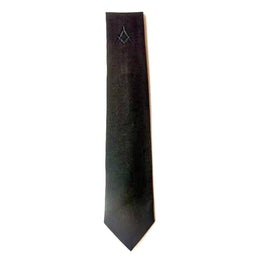

Masonic Collars


Masonic collars play an essential role in the arrangement of the meeting, as they allow for the clear identification of the office held or the ritual context in which they are worn. Choosing a suitable collar therefore means, above all, ensuring the coherence of the regalia, respect for the Lodge's customs, and the quality of the finishings. Through this collection, Nos Colonnes offers Masonic collars designed to meet the needs of the main rites and offices, with meticulous, clear models suited to serious practice.
Collars by Officer Function (AASR)
| Officer | Jewel suspended from the collar | Main symbolism |
|---|---|---|
| Worshipful Master | Square | Leadership of the Lodge |
| Senior Warden | Level | Equality (horizontal instrument) |
| Junior Warden | Plumb (plumb line) | Uprightness (vertical instrument) |
| Orator | Open book | Masonic law, guardian of traditions |
| Secretary | Crossed quills | Memory of the Lodge |
| Treasurer | Crossed keys | Management of the Lodge's assets |
| Director of Ceremonies | Staff (or wand) | Guidance of the work and decorum |
Note: jewels and colours vary according to the rite (AASR, French Rite, Rectified Scottish Rite, Emulation Working) and the obedience (GLNF, GLDF, GODF, GLFF, Le Droit Humain). Always order in accordance with the customs of the Lodge concerned. The sword is traditionally the attribute of the Inner Guard (flaming sword) or the Expert.
Frequently asked questions about Masonic collars
Who wears a collar in the Lodge?
Active Officers: Worshipful Master, Wardens, Orator, Secretary, Treasurer, Director of Ceremonies, Almoner, Inner Guard, Expert. Higher degree Brothers also wear a collar specific to their degree.
What is the difference between a collar and a sash?
The collar is a wide sash (often in moire or velvet) from which hangs an Officer's jewel. The sash is narrower, denoting a degree or a rite, without necessarily having a hanging jewel.
Does the collar change according to the rite?
Yes. The shape, colour and suspended jewel vary depending on the rite (AASR, French Rite, Rectified Scottish Rite, Emulation Working) and the obedience. It is essential to order the collar compliant with your Lodge.
Should you personalise your collar?
The collar is an attribute of office, handed over during the installation. It is generally not personalised, unless there is a specific option from the Lodge. The suspended jewel can be engraved.
Which material to choose: moire, velvet or satin?
Moire is the most common traditional material for Officers' collars. Velvet is used for certain higher degrees or specific rites. Satin is less common but may be offered for warm or travelling Lodges.
Which jewel hangs from the Worshipful Master's collar?
It is the Square, which marks the leadership of the Lodge. The other Officers wear the Level (Senior Warden), the Plumb (Junior Warden), the open book (Orator) or the crossed keys (Treasurer), which can be found in our Lodge jewels.
Is the collar worn with the apron?
Yes, the collar completes the Officer's regalia without replacing the apron, worn at all degrees since initiation. The apron marks the degree, the collar the office held.
What happens to the collar at the end of the term of office?
The collar is an attribute of office: it is handed over during the installation. Some Lodges then present a jewel or a Past Master sash in tribute to the term served.

Le sautoir maçonnique : un décor de fonction avant tout
Dans la tenue maçonnique, le sautoir n'est pas un ornement. Il identifie celui qui le porte : sa fonction, sa place dans l'atelier, parfois son grade. Un Vénérable Maître, un Orateur, un Expert ou un Chevalier Rose-Croix ne portent pas le même sautoir, et cette distinction répond à des usages précis. C'est ce qui rend le choix important et impose de s'y référer avant toute commande.
Le sautoir se porte autour du cou et tombe en pointe sur la poitrine, recevant un bijou dont l'emblème varie selon la charge exercée ou le grade. Il se distingue ainsi du cordon ou du baudrier, portés en travers du corps selon d'autres usages. Pour ces derniers, notre collection cordons et baudriers maçonniques leur est dédiée.


Comment choisir son sautoir maçonnique ?
Commencez par votre rite
C'est le premier critère, et le plus déterminant. Un sautoir du Rite Écossais Ancien Accepté, du Rite Français Groussier ou de Memphis-Misraïm ne répond pas aux mêmes usages, ni aux mêmes codes. Le plus sûr est de se référer à ce qui est effectivement porté dans votre atelier, ou de demander confirmation avant de commander.
Identifiez votre fonction ou votre grade
Chaque office possède son bijou et donc son sautoir. En loge bleue comme dans les hauts grades, les emblèmes varient selon la fonction exercée ou le grade. Il est donc nécessaire d'identifier précisément l'office ou le degré concerné avant de choisir un modèle.
Choisissez le niveau de finition adapté
Un sautoir destiné à un usage régulier doit être solide et bien exécuté. Certaines occasions peuvent justifier une finition plus soignée, mais cela relève du choix personnel. L'essentiel reste la conformité du modèle, non son niveau d'apparat.
Pensez à la cohérence de la tenue
Un sautoir ne se porte jamais seul. Il s'inscrit dans un ensemble comprenant le tablier, les gants et le bijou de fonction. L'essentiel est la cohérence avec le rite pratiqué : formes, emblèmes et usages doivent correspondre à ceux de l'atelier, bien plus qu'à des considérations esthétiques.
Nos sautoirs maçonniques par rite
REAA
Au Rite Écossais Ancien et Accepté, les sautoirs d'officiers de loge bleue sont bleu turquoise bordé de rouge, avec un bijou de fonction suspendu en pointe. Les emblèmes varient selon l'office exercé : équerre pour le Vénérable Maître, niveau pour les Surveillants, épée pour le Tuileur, plumes entrecroisées pour le Secrétaire, clés entrecroisées pour le Trésorier.
Pour les hauts grades, les couleurs et les compositions évoluent selon les degrés : le Rose-Croix (18e degré) se caractérise par des décors rouges, le Kadosh (30e degré) par des compositions noir et blanc, et les dignitaires du 33e degré portent des sautoirs blancs richement ornés.
Rite Français Groussier (RFG)
Au Rite Français Groussier, les sautoirs d'officiers sont en ruban bleu turquoise, avec un bijou de fonction suspendu en pointe. Les emblèmes et les broderies sont similaires à ceux du Rite Écossais Ancien Accepté.
Rite Français Traditionnel (RFT) / Rite Français Moderne Rétabli (RFMR)
Au Rite Français Traditionnel ou Moderne Rétabli, les sautoirs d'officiers sont en ruban bleu ciel, avec un bijou de fonction suspendu en pointe. Le sautoir du Vénérable Maître porte parfois une broderie d l'Étoile Flamboyante rouge, avec lettre G en son centre. Les bijoux peuvent être identiques à ceux du Rite Écossais Ancien Accepté ou du Rite Français Groussier, mais peuvent également suivre les modèles qui suivent la codification de 1801.
Les Ordres de Sagesse, qui prolongent le Rite Français au-delà de la loge bleue, introduisent des décors, des couleurs et des symboles propres à leurs grades.
Régime Écossais Rectifié (RER)
Au RER , les sautoirs de loge bleue sont en ruban bleu ciel, avec des bijoux de fonction proches de ceux du Rite Écossais Ancien Accepté, tout en présentant quelques différences propres au rite.
Dans les loges de Maître Écossais de Saint-André, les sautoirs sont verts bordés de rouge et portent des bijoux spécifiques.
L'Ordre Intérieur utilise des décors rouges, également associés à des bijoux propres à ses fonctions et à sa structure.
Memphis-Misraïm
Dans les rites de Memphis-Misraïm, les sautoirs d'officiers sont le plus souvent en ruban bleu turquoise bordé de violet, même si certaines obédiences utilisent directement le violet. Les bijoux de fonction sont identiques à ceux du Rite Écossais Ancien Accepté ou du Rite Français Groussier.
Les hauts grades reprennent le plus souvent la structure du REAA jusqu'au 33e degré, avec des variantes propres aux grades au-delà. Dans certaines obédiences, l'ensemble des hauts grades est porté en violet.
Dignitaires d'obédiences (GLDF, GLNF, GODF, GLFF, DH)
Les sautoirs de dignitaires d'obédience ne relèvent pas des usages de la loge, mais d'une fonction exercée au niveau de la structure obédientielle. Ils correspondent à des charges telles que député, conseiller ou grand officier, et obéissent à des codes propres à chaque obédience. Leur apparence et leur couleurs varient selon les organisations et ne dépendent pas directement du rite pratiqué en loge.

Pourquoi choisir Nos Colonnes ?
Nos Colonnes est dédié aux décors maçonniques, avec une attention particulière portée à la conformité des modèles proposés. Chaque sautoir correspond à un usage identifiable : rite, fonction, degré. Il ne s'agit pas de produits génériques, mais de décors conçus en fonction des pratiques réelles.
La collection couvre les principaux rites pratiqués en France et à l'étranger, avec des références pour les différents offices et une large variété de degrés. Tous nos sautoirs peuvent être personnalisés, notamment pour l'équipement complet d'un atelier.
Pour approfondir l'histoire et la symbolique du sautoir maçonnique, un article dédié est disponible et complète utilement les fiches produits.
