





The Swedish Rite: The Christian Freemasonry of the Northern Kingdoms
The Swedish Rite remains largely unfamiliar across much of European Freemasonry, despite being the principal initiatic system of the Northern kingdoms. Practised in Sweden, Denmark, Norway, Iceland and Finland, the Swedish Rite occupies a singular place within contemporary Masonry. At once Christian, mystical and monarchical, it developed outside the great universalist currents that emerged from French and English Freemasonry. The Swedish Rite has therefore preserved a spiritual structure deeply rooted in Scandinavian Protestant culture, enriched by Templar, Rosicrucian and illuminist influences that give it a distinctive and unmistakably Nordic character.
- 1. The Beginnings of Freemasonry in Sweden
- 2. Why the Swedes Created Their Own Masonic Rite
- 3. The Swedish Rite and the Templar Temptation
- 4. Charles XIII and the Transformation of the Swedish Rite
- 5. The Degrees of the Swedish Rite
- 6. Why Is the Swedish Rite Exclusively Christian?
- 7. Monarchy and Freemasonry: a Unique Alliance
- 8. The Swedish Rite Today
- 9. Conclusion – The Swedish Rite, Between Christian Monarchy and Mystical Initiation
- FAQ – The Swedish Rite and Scandinavian Freemasonry j
- Podcast – The Swedish Rite: the Christian Freemasonry of the Northern Kingdoms
1. The Beginnings of Freemasonry in Sweden
The Freemasonry established in Sweden from 1735 onwards was essentially of French origin. Unlike what occurred across much of eighteenth-century Europe, London played almost no role in its earliest development. The first Lodge was founded in Stockholm by Count Axel Wrede-Sparre (1708–1772), who had received the three Craft degrees during a stay in France. Early Swedish Freemasonry therefore developed under strong French continental influence, both in its rituals and in its organisation.
A few years later, Baron Carl Frederik Scheffer (1715–1786) also returned from France carrying an authorisation granted in 1737 by Lord Derwentwater, then Grand Master of the Grand Lodge of France. This patent empowered him to establish and administer Lodges in Sweden until a national structure could eventually be formed. The objective was already clear: to create an autonomous Swedish Freemasonry while remaining recognised by the major Masonic powers of Europe.
The emergence of this new society nevertheless alarmed King Frederick I (1676–1751). In 1738, he prohibited Freemasonry under penalty of death. This dramatic decision proved short-lived, however. The Swedish Freemasons swiftly demonstrated their loyalty to the Crown, and the ban was lifted only a few months later. The episode already reveals a lasting characteristic of Nordic Freemasonry: its constant concern to maintain a harmonious relationship with monarchical authority.
The Grand Lodge of Sweden was officially established in 1761 under the protection of King Adolf Frederick (1710–1771). Scheffer became its first Grand Master. The patents still came from the Grand Lodge of France, and the earliest rituals remained largely inspired by French usages. In 1770, the Grand Lodge of London in turn recognised the Swedish Obedience, thereby confirming its place within the European Masonic landscape.
The high degrees also appeared very early in Sweden. As early as 1743, Scheffer returned from France with several Scottish higher degrees and founded a first Chapter in Stockholm. Other systems were subsequently introduced into Gothenburg and various towns throughout the kingdom. Mid-eighteenth-century Swedish Freemasonry was therefore shaped by the same influences present across much of Europe: Scottish higher degrees, chivalric legends, Christian mysticism and a fascination with esoteric knowledge. These various elements would soon be reorganised, however, according to a distinctly Nordic sensibility.
2. Why the Swedes Created Their Own Masonic Rite
Despite the French influences that had accompanied the beginnings of Freemasonry in Sweden, Swedish Freemasons soon began to feel a certain cultural distance from the systems imported from Paris. Through their religion, mentality and intellectual climate, they felt closer to the Protestant German states than to the Latin world. This affinity gradually encouraged the emergence of an original system, deeply shaped by the Christian mysticism of Northern Europe.
The central figure in this transformation was Carl Frederik Eckleff (1723–1786), a physician and adviser to the Royal Chancellery. In 1759, he founded a Chapter of higher degrees that would become the true nucleus of the future Swedish Rite. Eckleff did not merely adopt existing systems: he reorganised them, giving them a new doctrinal coherence nourished by Protestant spirituality, chivalric symbolism and Rosicrucian influences.

Carl Frederik Eckleff, principal architect of the future Swedish Rite during the eighteenth century
Among the major inspirations behind this new orientation was Emanuel Swedenborg (1688–1772), the Swedish scholar, theologian and mystic whose spiritual visions exerted a considerable influence within European esoteric circles. Although the Swedish Rite cannot properly be described as “Swedenborgian” in the strict sense, one nevertheless finds within its atmosphere the idea of an initiation directed towards inner illumination and the contemplation of heavenly realities. The initiatic quest thereby assumed a dimension less speculative or philosophical than profoundly spiritual.
When the Grand Lodge of Sweden was established in 1761, Eckleff became its Deputy Grand Master. He then undertook a thorough reworking of his rituals in order to secure their adoption by the new Obedience. Gradually, a specifically Swedish system began to emerge. The aim was no longer simply to import foreign higher degrees, but to construct a coherent initiatic path corresponding to the religious and political culture of the Nordic kingdoms.
This development explains why the Swedish Rite ultimately resembles neither the French nor the English systems. Its spiritual world is that of a contemplative Christian Freemasonry, strongly hierarchical and deeply centred upon mystical experience. Even at this early stage, the future originality of the Rite was already clearly visible: it did not seek universality, but rather to embody a particular sacred vision of monarchy, Christianity and initiation.
3. The Swedish Rite and the Templar Temptation
Like many of the European higher degrees of the eighteenth century, the Swedish Rite was profoundly shaped by the fascination surrounding the Templar legacy. The period witnessed the proliferation of systems claiming to preserve the secrets of the medieval Knights Templar, supposedly transmitted in secrecy after the disappearance of the Order itself. Among these movements, the German Strict Templar Observance enjoyed immense prestige throughout the German states.
The Swedish Rite adopted much of this chivalric legend, though it adapted it to its own spiritual and political context. Whereas the Strict Observance claimed to restore the ancient organisation of the Templar provinces in Germany, the Swedes asserted that the Nordic kingdoms likewise corresponded to historic provinces of the Order. Denmark thus became the Eighth Province, while Sweden was identified as the Ninth Province. The Swedish Rite therefore assigned itself the mission of spiritually restoring these territories within a framework that was both Masonic and chivalric.
Relations between the Swedish Rite and the Strict Observance nevertheless remained complex. The two systems shared a common symbolic world, whilst also remaining rivals. Matters became even more complicated when a German Freemason, Johann Wilhelm Kellner von Zinnendorf (1731–1782), acquired certain Swedish degrees from Eckleff in order to disseminate them in Germany in a revised form. This system, which became known as the Rite of Zinnendorf, preserved several elements of the Swedish Rite whilst adapting them to the German environment.
The circulation of such rituals reveals the extent to which eighteenth-century Freemasonry formed a fluid and constantly evolving world, shaped by alliances, transmissions and perpetual reinterpretations. Initiatic systems were continually transforming themselves, often around the same themes: chivalry, esoteric Christianity, Templar lineage and inner illumination.
The figure who gave the Swedish Rite an even more explicitly chivalric orientation was Prince Charles of Södermanland (1748–1818), the future Charles XIII of Sweden. Initiated into Eckleff’s system in 1770, he quickly developed a passion for mysticism and Templar doctrines. Eckleff immediately understood the advantage he could derive from the support of such an influential royal prince. He gradually transferred to him the leadership of the higher degrees, together with all the documents necessary for administering the Rite.
Charles then added two further degrees to the nine already established, strengthening the chivalric and Rosicrucian character of the system still further. He was also received into the Inner Order of the Strict Templar Observance, which reinforced the links between the two currents.
In 1772, following the discrediting of Baron von Hund, founder of the Strict Observance, Charles even hoped to assume leadership of the German Templar Order. The Convent of Kohlo ultimately preferred Ferdinand of Brunswick-Lüneburg (1721–1792). This failure probably had decisive consequences for the future of the Swedish Rite. Had the two systems merged, the Nordic Rite would doubtless have disappeared alongside the Strict Templar Observance only a few years later. Instead, it preserved its autonomy and was able to pursue its own distinct evolution within the Scandinavian monarchies.
4. Charles XIII and the Transformation of the Swedish Rite
Prince Charles of Södermanland was not merely a protector of Swedish Freemasonry. He profoundly transformed the Rite and played a decisive role in giving it its definitive form. A complex and deeply impressionable figure, drawn to occult sciences, Christian mysticism and initiatic societies, he saw in Freemasonry far more than an aristocratic or philosophical circle. For him, initiation was meant to lead to genuine spiritual regeneration.
As he gradually assumed leadership of the system created by Eckleff, Charles sought to strengthen both its doctrinal coherence and its chivalric character. The two additional degrees he introduced further reinforced its Rosicrucian and illuminist atmosphere. Above all, however, the Swedish Rite increasingly began to structure itself as a true Christian order placed under the protection of the monarchy.
This development profoundly distinguishes the Swedish Rite from most other European Masonic systems. In the Latin countries, Freemasonry gradually moved towards a more philosophical, and at times even rationalist or political orientation. In the Nordic kingdoms, by contrast, it remained closely bound to a sacred conception of royal authority and to an explicitly Christian spirituality.

The Great Hall of St John, the principal temple of the Grand Lodge of Sweden at the Bååth Palace in Stockholm
The future Charles XIII played a decisive role in this evolution. His princely prestige enabled the Rite to establish itself permanently within the structures of the kingdom. Far from being marginalised or opposed, Swedish Freemasonry gradually became integrated into the country’s social and monarchical order. This close relationship with the Crown largely explains the remarkable stability of the Swedish Rite across the centuries.
When Charles finally ascended the throne in 1809 under the name of Charles XIII, this privileged relationship between monarchy and Freemasonry reached its culmination. The sovereign now embodied both royal authority and supreme initiatic authority. Swedish Freemasonry thus ceased to be merely one initiatic society among others: it became a symbolic expression of Nordic monarchical identity itself.
This situation remains almost without equivalent in the history of European Freemasonry. Elsewhere, relations between Freemasonry and political authority were often conflictual or ambiguous. In Sweden, by contrast, they took the form of a lasting alliance, rooted in a shared Christian and hierarchical conception of society.
5. The Degrees of the Swedish Rite
The Swedish Rite is also distinguished by its remarkably structured initiatic organisation. Whereas many Masonic systems gradually accumulated dozens of higher degrees that were sometimes difficult to articulate coherently, the Nordic Rite instead sought to construct a hierarchical and unified spiritual path. Each stage is intended to guide the candidate towards a deeper understanding of Christianity and of the inner vocation of the Christian knight.
The system is traditionally divided into three principal series.
The Lodge of St John comprises the first three degrees:
I. Apprentice
II. Fellowcraft
III. Master Mason
As in other Masonic systems, these degrees form the foundation of initiation. Even at this level, however, the Swedish Rite already clearly affirms its Christian identity. Biblical references occupy a central place within the rituals, and their atmosphere differs markedly from that of more universalist systems.
The Lodge of St Andrew follows:
IV/V. Apprentice and Companion of St Andrew
VI. Master of St Andrew
This second series marks an important transition. St Andrew does not appear merely as the patron saint of Scotland, as he is often presented in certain Scottish higher degrees. Above all, he becomes the figure of the disciple who leads others towards Christ. According to the Gospel, Andrew was not only the first called, but also the one who brought his brother Simon Peter to Jesus. The symbolism of the Swedish Rite uses this figure to express the idea of a gradual spiritual deepening.
The third series corresponds to the Chapter:
VII. Very Illustrious Brother, or Knight of the East
VIII. Most Illustrious Brother, or Knight of the West
IX. Enlightened Brother
X. Very Enlightened Brother
The system is finally crowned by an essentially administrative XIth Degree:
XI. Most Enlightened Brother, Knight and Commander of the Red Cross
This progression should not be understood as a mere accumulation of honorary titles. On the contrary, the Swedish Rite possesses a genuine initiatic logic. The further the candidate advances through the degrees, the more central the contemplative and mystical dimensions become. The aim is not the acquisition of esoteric knowledge in the conventional sense, but rather an inner transformation directed towards Christian illumination.
Unlike certain eighteenth-century esoteric currents, the Swedish Rite also displayed only limited interest in alchemy or spectacular occult practices. Its focus remained essentially theurgical: that is to say, centred upon the possibility of spiritual union with the Divine. In this respect, it occasionally recalls certain aspects of the Rectified Scottish Rite or of the Martinist tradition, even though the historical and doctrinal context remains profoundly different.
The Swedish initiatic system as a whole therefore appears as an attempt to construct an inner Christian chivalry, placed under the sign of contemplation, monarchical fidelity and the hope of spiritual regeneration.
6. Why Is the Swedish Rite Exclusively Christian?
The Christian dimension of the Swedish Rite is undoubtedly its best-known characteristic, though also one of the most misunderstood. Across much of contemporary Freemasonry, Christianity now appears merely as one cultural or symbolic inheritance among many others. The Swedish Rite adopts a far more explicit position: only Christians may be admitted to it.
This requirement does not arise from simple religious conservatism. It proceeds directly from the very structure of the Rite itself. The entire initiatic system rests upon a Christian understanding of the world, of sacred history and of man’s spiritual destiny. Biblical references do not merely serve as ritual decoration: they constitute the doctrinal core of the initiatic journey.
The Swedish Rite is moreover placed under the patronage of two major apostolic figures: St John and St Andrew. St John is associated not only with the Gospel, but above all with the Apocalypse and the vision of the New Jerusalem. He embodies the contemplative and prophetic dimension of initiation. St Andrew, for his part, symbolises the disciple who leads others towards Christ and prepares the way towards a deeper understanding of the Christian mystery.
This orientation sharply distinguishes the Swedish Rite from Masonic systems that favour a more universalist approach. Whereas certain Obediences regard Freemasonry as a spiritual space open to all religions, the Swedish Rite maintains instead that a coherent Christian initiation presupposes prior adherence to the Christian faith.
A common misunderstanding must nevertheless be avoided. The Swedish Rite is not simply a superimposition of Christianity upon Masonic symbolism. Nor is it a decorative Christianity artificially grafted onto older initiatic structures. The Swedish system forms a relatively coherent theological whole in which the degrees, symbols and chivalric references all converge towards a single spiritual vision.
This coherence also explains why the Swedish Rite retains such a profoundly mystical atmosphere. Its purpose is not merely moral or philosophical. It constitutes a path of inner transformation directed towards the contemplation of divine realities. In this respect, the Rite occasionally recalls certain illuminist currents of the eighteenth century, whilst remaining firmly rooted in Nordic Lutheran Christianity.
This fidelity to a strong confessional identity probably explains the enduring singularity of the Swedish Rite within the European Masonic landscape. Whilst many initiatic systems gradually softened or abandoned their religious references, the Swedish Rite instead chose to preserve them fully, even at the risk of appearing as a system apart within contemporary Freemasonry.
7. Monarchy and Freemasonry: a Unique Alliance
The Swedish Rite maintains a relationship with monarchy that has virtually no equivalent elsewhere in European Freemasonry. From the eighteenth century onwards, the Swedish sovereigns understood the value they could find in this aristocratic and Christian institution, deeply attached to the social order of the kingdom. Gradually, Nordic Freemasonry ceased to be regarded merely as a discreet society tolerated by the authorities: it became integrated into the monarchical world itself.
This evolution reached its culmination under Charles XIII. From his reign onwards, all Kings of Sweden were statutorily Grand Masters of Swedish Freemasonry. Royal authority and supreme initiatic authority were thus united in a single person. This arrangement endured until the present reign of Carl XVI Gustaf (born 1946), who retained the title of Protector of Swedish Freemasonry without personally exercising the Grand Mastership.
This close relationship with the Crown gave the Swedish Rite exceptional stability. Whilst many European Obediences experienced political conflicts, schisms or periods of persecution, Swedish Freemasonry remained firmly rooted within the structures of the monarchical state. Its Christian and loyalist identity enabled it to avoid many of the tensions that elsewhere opposed Freemasonry to religious or political authorities.
The most striking symbol of this alliance remains the Order of Charles XIII, established in 1811 by the sovereign himself. This Order occupies a singular position, since it belongs both to the Masonic world and to the official honours system of the Swedish Crown. It is therefore not merely an additional degree or an internal distinction within an Obedience, but a genuine royal chivalric order.

The Royal Order of Charles XIII, an honorary distinction reserved for certain high dignitaries of the Swedish Rite
The Order of Charles XIII may contain no more than thirty-three members. Admission requires not only attainment of the XIth Degree of the Swedish Rite, but also recognition as a particularly deserving Freemason. This numerical limitation further reinforces both its prestige and its markedly elite character.
Through this Order, the Swedish Rite reveals a highly distinctive conception of Freemasonry. In the Nordic kingdoms, initiation was never conceived as a force intended to challenge the established order. Rather, it appears as a spiritual and chivalric extension of the Christian monarchical order itself. The ideal Freemason is not presented as an independent thinker defying traditional structures, but as a man called to serve God, the king and his neighbour with loyalty.
Such a vision may seem surprising within a Masonic world often shaped by the liberal or rationalist inheritances of the nineteenth century. It nevertheless reminds us that there has never been a single European Masonic tradition, but rather several historical sensibilities, sometimes profoundly different from one another.
8. The Swedish Rite Today
Today, the Swedish Rite remains the principal Masonic system of the Nordic countries. It is practised in Sweden, Denmark, Norway, Iceland and parts of Finland. Its influence therefore extends far beyond Sweden itself, even though each national Obedience preserves certain distinctive characteristics of its own.
In Finland, the situation is more complex. The country contains both a Freemasonry of Anglo-Saxon tradition and structures working according to the Swedish Rite. This coexistence reflects Finland’s particular historical trajectory, having long remained connected to the Swedish Crown before passing under Russian domination during the nineteenth century.
The Swedish Rite also exists, in adapted forms, within a small number of German and Spanish Lodges. These remain marginal, however, when compared with the central position the system continues to occupy within the Scandinavian monarchies.
Despite the profound transformations undergone by European society since the eighteenth century, the Swedish Rite has preserved the essential features of its historical identity. Its Christian character remains fully affirmed, together with its hierarchical organisation and mystical atmosphere. This continuity undoubtedly explains why it continues to intrigue Freemasons shaped by more universalist or rationalist traditions.
The Swedish Rite also occupies a distinctive position within international Masonic relations. Its exclusively Christian character naturally limits certain forms of recognition or exchange with Obediences open to all religions. Nevertheless, it remains fully integrated within the world of so-called regular Freemasonry and maintains close relations with the major recognised Obediences.
This fidelity to its original structures gives the Swedish Rite an almost timeless quality. Within a Masonic landscape often marked by reforms, ritual simplifications or modern ideological debates, it appears as one of the last great European initiatic systems to have preserved such a strong historical and spiritual continuity.
For many foreign Freemasons, the Swedish Rite therefore retains a kind of fascinating strangeness. Through its explicit Christian references, its chivalric heritage, its ancient connection to monarchy and its contemplative dimension, it seems to preserve something of the initiatic atmosphere characteristic of eighteenth-century Europe.
9. Conclusion – The Swedish Rite, Between Christian Monarchy and Mystical Initiation
The Swedish Rite occupies a singular place within the history of European Freemasonry. Born from the French influences of the eighteenth century, enriched by Nordic mysticism and deeply rooted in Scandinavian Protestant culture, it gradually forged an identity entirely its own: at once Christian, chivalric and monarchical.
Whereas other Masonic systems pursued forms of philosophical or symbolic universalism, the Swedish Rite preserved an openly confessional orientation. This fidelity to an explicitly Christian spiritual structure largely explains not only its originality, but also its remarkable continuity across the centuries.
Its historic connection with the Swedish Crown, its hierarchical organisation and its contemplative dimension make it perhaps one of the last great European initiatic systems still closely linked to a sacred vision of monarchy and Christian order. More than merely another Masonic Rite, the Swedish Rite appears instead as the living witness of another way of understanding Freemasonry: one less concerned with modern universalism than with spiritual regeneration and inner chivalry.
By Ion Rajolescu, Editor-in-Chief of Nos Colonnes — serving a Masonic voice that is just, rigorous, and alive.
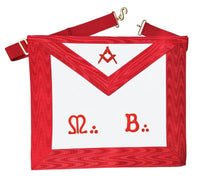
Discover our collection of Swedish Rite Chapter regalia, inspired by the capitular and chivalric traditions of the Nordic kingdoms.

Read the full transcript of the podcast here for those who prefer reading or want more detail.
Podcast – The Swedish Rite: the Christian Freemasonry of the Northern Kingdoms
The Swedish Rite remains one of the least known major Masonic systems in Western Europe. Yet across the Scandinavian kingdoms, it is still the principal form of Freemasonry practised today. Through it survives an initiatic tradition that is deeply Christian, mystical and monarchical, profoundly different from the more universalist forms encountered elsewhere.
The history of the Swedish Rite begins in the middle of the eighteenth century. The first Lodges established in Sweden were of French origin. This point matters, because people often imagine that all European Freemasonry derives directly from London. In Sweden, however, it was mainly aristocrats returning from France who introduced the first Masonic degrees.
In seventeen hundred and thirty-five, Count Axel Wrede-Sparre founded the first known Lodge in Stockholm. A few years later, Baron Carl Frederik Scheffer also returned from France carrying authorisation to establish Lodges under the authority of the Grand Lodge of France. Swedish Freemasonry was therefore born within an atmosphere strongly shaped by French practices of the period.
But the Swedish Brethren quickly began to feel a certain distance from the Latin world. Their culture, religion and spiritual temperament brought them closer to the Protestant German states and to the mystical traditions of Northern Europe.
This is where the important figure of Carl Frederik Eckleff enters the story. A physician, senior royal official and mystic, Eckleff reorganised the high degrees practised in Sweden in order to create a coherent initiatic system suited to Scandinavian spiritual culture.
His work was deeply influenced by the mystical climate of the Northern eighteenth century. The Swedish thinker Emanuel Swedenborg exerted considerable influence within certain European spiritual circles at the time. Although the Swedish Rite cannot properly be described as Swedenborgian in the strict sense, one still finds within it the same aspiration towards inner illumination and contemplation of heavenly realities.
Gradually, the Swedish Rite moved away from both French and English systems and developed an identity of its own. An identity built upon three pillars: Christianity, chivalry and monarchy.
Like many eighteenth-century high-degree systems, the Swedish Rite was also influenced by Templar legend. During that period, many initiatic systems claimed to preserve the secret heritage of the medieval Knights Templar.
The dominant model was then the German Strict Templar Observance. The Swedes adopted part of this chivalric imagery, but adapted it to their own vision. They asserted that the Scandinavian kingdoms themselves corresponded to ancient Templar provinces awaiting spiritual restoration.
The future Charles the Thirteenth played a decisive role here. A mystical prince fascinated by initiatic societies and chivalric doctrines, he profoundly transformed the Swedish Rite. As he gradually took control of the system created by Eckleff, he strengthened its Christian, Rosicrucian and monarchical dimensions.
Charles also added two further degrees to the original structure. But above all, he gave the Swedish Rite a unique place within European Freemasonry: that of an initiatic order closely linked to the Crown.
When Charles eventually became King of Sweden at the beginning of the nineteenth century, the relationship between monarchy and Freemasonry reached its height. From then onwards, the sovereigns of Sweden would also serve as Grand Masters of Swedish Freemasonry.
This situation remains almost without equivalent elsewhere in Europe.
The Swedish Rite itself is organised into several successive series. The first degrees belong to the Lodge of St John: Apprentice, Fellowcraft and Master Mason. They are followed by the Lodge of St Andrew and then by the Chapter degrees.
The entire system progressively leads towards a form of inner Christian illumination. The Swedish Rite does not merely seek to transmit symbols or moral teachings. It presents itself as a genuine path of spiritual transformation.
St John and St Andrew occupy a central place within the system. St John is associated with the vision of the New Jerusalem and with the contemplative dimension of initiation. St Andrew symbolises the disciple who leads others towards Christ.
This orientation explains why the Swedish Rite remains exclusively Christian. Unlike other forms of Freemasonry that admit men of all religions, the Swedish system considers that its initiatic journey rests entirely upon the Christian faith.
But one misunderstanding must be avoided. Christianity is not simply a ritual decoration artificially added to Freemasonry. It forms the very structure of the system itself.
Another remarkable point is that the Swedish Rite never showed much interest in alchemy or the more spectacular occult practices that fascinated certain eighteenth-century esoteric circles. Its orientation was essentially mystical and theurgical. It sought less to manipulate hidden forces than to establish an inner relationship with the Divine.
The most striking symbol of the link between monarchy and initiation remains the Order of Charles the Thirteenth, created at the beginning of the nineteenth century. This chivalric order officially belongs to the Swedish Crown’s honours system. Yet it can only be conferred upon Freemasons who have reached the highest degrees of the Rite.
We are therefore confronted with something almost unique: an order that is both royal and Masonic.
Even today, the Swedish Rite remains alive throughout the Scandinavian countries. It has preserved most of its historic structures, its Christian identity and its contemplative spirit.
Within a Masonic world often shaped by modern ideological debates or ritual simplifications, the Swedish Rite appears almost like a surviving witness of the eighteenth century.
Above all, it reminds us that there has never been only one way of understanding Freemasonry. While some systems embraced philosophical universalism, the Northern kingdoms preserved a Christian, monarchical and mystical initiatic tradition deeply rooted in their own history.


I WANT TO RECEIVE NEWS AND EXCLUSIVES!
Keep up to date with new blog posts, news and Nos Colonnes promotions.
