






Décors des Apprentis et Compagnons – Rite Standard d’Écosse (RSE)


Les décors des Apprentis et Compagnons du Rite Standard d’Écosse reflètent la sobriété et la précision de la tradition écossaise. Nos-Colonnes propose des tabliers et accessoires conformes aux usages français du RSE, avec le tartan Royal Stewart et la bavette arrondie emblématique du rite. Chaque pièce accompagne la progression initiatique : pureté de l’Apprenti, harmonie du Compagnon. Une sélection soignée pour s’équiper avec élégance et fidélité aux traditions écossaises.

The initiatory meaning of the Apprentice grade
Visit first degreetheApprenticemarks the Brother's entry into the Order and into the light. In the Scottish tradition, this moment is not just a formality: it's a real commitment. The apprentice learns to stand in silence, to observe attentively, to carve the rough stone of his being. He discovers the importance of the right gesture and controlled speech, for the Scottish Standard Rite is a rite of work. by heartwhere every word must be spoken with sincerity and respect.
Learning by heart, inherited from medieval stonemasons who passed on their trade secrets orally, gives RSE lodges a unique atmosphere. Every brother must know his part of the ritual, every officer must be able to convey his role with precision. This tradition gives the ritual a lively, vibrant and deeply emotional character. Music often accompanies movements and key moments, giving the rite an almost theatrical dimension that reinforces the initiatory nature of the ceremony.
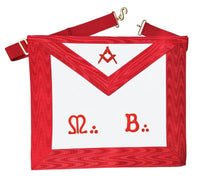
Apprentice's décor reflects this purity: a apron whitesymbolizing innocence and inner availability. In French RSE practice, this apron retains the rounded bib characteristic of the Standard Rite of Scotland. It is worn with the flap upThe apron is a reminder that the apprentice is still preparing his inner temple. As he progresses along the path of initiation, this apron becomes a landmark, a tangible sign of his first steps into the light.

The Journeyman's progression: a step towards harmony
Become CompanionTo become a Companion is to cross an important threshold: that of knowledge, balance and discernment. While the apprentice learns mainly to listen and observe, the journeyman begins to understand the dynamics of the lodge, to interpret the symbols and to participate more actively in the work. He discovers the value of numbers, the harmony of proportions, the geometry that structures the temple and Masonic thought.
In traditional Scotland, the Journeyman was also called journeymanthe one who travels to learn. This idea is echoed in the Scottish Standard Rite: the Companion is a Brother who explores, who compares, who seeks to understand the invisible structure behind the form. The Branda complementary degree once directly linked to the Compagnon, preserves the memory of this intermediary stage when the mason assumed responsibility for his work. Although this degree is now considered lateral in France, it still permeates the symbolism of the second grade.
The Compagnon's decoration reflects this change: the apron is now adorned with two rosettesoften in tartan Royal Stewarta visual mark of Scottish descent. As for the bib, it is now folded down, signifying that the Companion is participating in the construction of the temple with greater mastery. Each element symbolizes a step forward, a structuring stage in the initiation process.

Apprentice and Companion aprons in the Standard Rite of Scotland
Visit rounded apron flap of the Standard Rite of Scotland are one of the rite's most recognizable signatures. Unlike the triangular bibs found in other traditions, the RSE bib is soft and elegant, directly inspired by the aprons worn with the kilt. This rounded shape has been retained in the French versions to preserve the link with the origin of the rite.
The apprentice's apron is deliberately simple: white, smooth, luminous. Its apparent simplicity masks a great symbolic depth: it is the mason's first garment, the one that holds the traces of his inner work.
Visit Compagnon apron is distinguished by the presence of two carefully added Royal Stewart tartan rosettes. This tartan, chosen for the French versions of the rite, embodies Scottish identity in a continental context. On some models, a fine border or reinforced seams underline the progression without freezing it in excessive ornamentation. The Standard Rite of Scotland values sobriety, clarity and accuracy above all else.
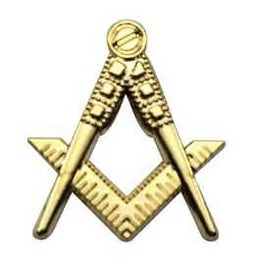
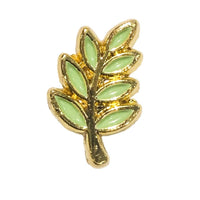
Nos-Colonnes takes care to offer complementary accessories adapted to these degrees: white gloves, pins, badges, belts or tartan elements. Each item is designed to fit elegantly into the ritual outfit, without ever betraying the spirit of the rite.

Handcrafted products: know-how at the service of the rite
The decorations in this collection are made using the most exacting methods of craftsmanship. Our team works with specialized workshops that have perfectly mastered the codes of Scottish Masonic decorations. Each apron is sewn by hand or on a fine machine, with particular attention paid to rounding, stitching and embroidery.
Visit Royal Stewart tartanThe rosettes, when present, are cut in a precise orientation to respect the original pattern. The rosettes are mounted one by one, and the motifs are perfectly aligned to preserve the visual harmony of the Standard Rite of Scotland. Materials are chosen for their comfort, durability and longevity. Our craftsmen work with Brothers and for Brothers: each decoration is designed to last, accompany and inspire.
This demand for quality is an integral part of Nos-Colonnes' identity. We don't offer generic accessories, but rather settings faithful to Scottish traditionscapable of conveying the beauty and depth of the rite.

Towards harmonious progression in the Standard Rite of Scotland
The passage from Apprentice to Companion is more than just a change of apron or the addition of rosettes. It is a key moment in the Brother's spiritual development. These degrees form a coherent whole, an ascent in knowledge and awareness. The decoration accompanies this progression and underlines its symbolic significance.
By choosing a apron in accordance with Standard Rite of ScotlandThe initiate inscribes his work in a secular filiation, that of the Scottish builders and the lodges that have handed down their ritual from generation to generation. The decor thus becomes a silent witness to the path travelled.
Brothers wishing to continue their progression can then move on to the collection dedicated to the Master grade, where new symbols, new colors and a new initiation charge await them.
To find out more about the decor of the Standard Rite of Scotland
Nos-Colonnes offers you all the collections related to the Standard Rite of Scotland:
You can explore the Master grade scenery here:
And find the lodge jewels corresponding to the rite:
For an overview of the Standard Rite of Scotland, the main collection is available here :
