




Cordons/Baudriers


Les cordons maçonniques occupent une place particulière dans la tenue du Maître Maçon, car ils expriment à la fois l'appartenance au troisième degré et le respect des usages propres à chaque rite. Bien choisi, un cordon ou un baudrier doit s'intégrer avec justesse à l'ensemble des décors, tout en offrant une présentation soignée et conforme à la pratique de la loge. À travers cette collection, Nos Colonnes propose des cordons maçonniques pensés pour les principales traditions, avec des modèles adaptés au REAA, au Rite Français et à Memphis-Misraïm, afin de répondre aux besoins d'une pratique sérieuse et cohérente.
Décor par niveau et par rite
| Niveau / Fonction | Type de décor | REAA | Rite Français |
|---|---|---|---|
| Apprenti / Compagnon | Tablier seul | Pas de cordon | Pas de cordon |
| Maître | Tablier + ruban éventuel | Selon usage de loge | Selon usage de loge |
| Vénérable Maître | Sautoir + bijou Vénérable | Sautoir avec équerre | Sautoir avec équerre |
| Officier (Surveillants, Orateur, etc.) | Sautoir avec bijou de fonction | Bijou et couleur spécifiques | Bijou et couleur spécifiques |
| Hauts Grades | Cordons et sautoirs | Variables par degré (4° à 33°) | Ordres de Sagesse |
Questions fréquentes sur les cordons maçonniques
Quelle est la différence entre un cordon et un sautoir ?
Le cordon est un ruban étroit ou un baudrier porté autour du cou, marquant un grade ou un rite. Le sautoir est un cordon plus large, souvent en moire ou en velours, porté par un Officier de loge et auquel pend le bijou de sa fonction.
Quand porte-t-on un cordon en loge ?
Le cordon ou sautoir se porte uniquement pendant les tenues de loge, à partir du grade ou de la fonction où il est requis. Il n'est pas porté en société profane.
Le cordon de Vénérable Maître est-il obligatoire ?
Le sautoir de Vénérable Maître est obligatoire pour exercer la fonction. À la fin du mandat, certaines loges remettent un cordon ou un bijou de passé Vénérable Maître en hommage au mandat accompli.
Existe-t-il un cordon de passé Vénérable Maître ?
Oui. Le bijou et cordon de passé Vénérable Maître se portent par le Frère ayant exercé cette charge. Sa forme varie selon les loges et les rites.
Comment entretenir les rubans de moire et de velours ?
Stocker à plat, à l'abri de la lumière directe. Ne jamais plier durablement. Utiliser une housse de protection. Éviter l'humidité, qui marque la moire.
À partir de quel grade porte-t-on un cordon ?
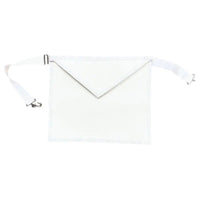
Aux grades d'Apprenti et de Compagnon, le tablier se porte seul, sans cordon. À partir de la Maîtrise, le port d'un ruban dépend de l'usage de la loge, et les Officiers portent un sautoir avec le bijou de leur fonction.
Quels rites sont couverts par cette collection ?
Les modèles proposés couvrent le Rite Écossais Ancien et Accepté, le Rite Français et Memphis-Misraïm. Pour les bijoux qui s'y accrochent, voir les bijoux de loge.
Que faut-il pour une tenue complète ?
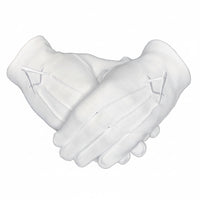
La tenue associe le tablier du grade, le cordon ou le sautoir de la fonction, et les gants blancs. L'ensemble des pièces est regroupé dans nos décors maçonniques.

The Masonic Cordon, Regalia of the Master Mason
In Masonic attire, the sash is not a sign of office, but of degree. In most rites, the Mason who has received the third degree wears a sash, regardless of any position held in the lodge. This is what distinguishes it from the collar, which is reserved for officers and associated with a jewel of office specific to each office.
The sash is worn across the body, from the right shoulder to the left hip, as an extension of the old sword belt, whose shape it retains. The term "baudrier" (belt/baldric) is still commonly used as a synonym. In practice, sash and baldric refer to the same object; the distinction is primarily terminological.
To delve deeper into the history and symbolism of this regalia, our article dedicated to Masonic collars and sashes provides additional information.


How to choose your Masonic collar?
Start with your rite
The color and composition of a cordon vary depending on the rite. This is not an aesthetic question, but one of use. A cordon from the Ancient and Accepted Scottish Rite does not correspond to one from the French Rite or Memphis-Misraïm. The safest bet is to refer to what is worn in your lodge.
Embroideries and emblems
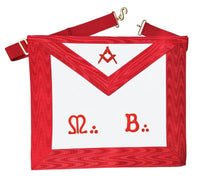
Cordons are available in plain or embroidered versions. The most common motifs are the square and compass, the blazing star, or the acacia. The choice depends on the lodge's customs: some prefer sobriety, while others allow more elaborate embroideries.
The finish
A cordon intended for regular use must be sturdy and well-made. The quality of the fabric and finishes impacts its durability. A rosette usually finishes the point of the cordon and can hold the Master's jewel.
Masonic Cords and Sashes by Rite
AASR
In the Ancient and Accepted Scottish Rite, the Master's sash is made of turquoise blue ribbon edged with red, usually ending in a red rosette. It is one of the most recognisable regalia of the third degree. Embroideries may be added according to the customs of the lodge, particularly around the symbols of the Master Mason degree.
French Rite (RFG / GODF)
In the French Groussier Rite, the Master's sash is turquoise blue, without the characteristic red trim of the AASR. The shape remains identical, but the overall design is generally more understated, consistent with the practices of the rite.
Traditional French Rite (RFT) / Restored Modern French Rite (RFMR)
In the Traditional French Rite and the Restored Modern French Rite, the Master's sash is made of sky-blue ribbon. It takes on the general form of the Master's baldric as known in other variants of the French Rite, with specific uses for these ritual forms.
Memphis-Misraïm
In the Memphis-Misraïm rites, the Master's cordon is most often blue bordered with purple, or entirely purple depending on the obediences. The symbols used remain similar to those of other rites, with occasional variations specific to these traditions.
A note on the RER and the Swedish Rite
Some rites do not use a cordon for the Master's degree. This is notably the case for the Rectified Scottish Rite and the Swedish Rite, where the Master does not wear a sash baldric. If you practice one of these rites, this type of regalia does not correspond to your usage.

Cord, bandolier, scarf: what's the concrete difference?
The three terms are often used interchangeably, which can lead to confusion. In practice, they refer to the same type of adornment worn across the body, from the right shoulder to the left hip.
The term "baudrier" (belt/baldric) is the oldest, inherited from the sword baldric. The term "cordon" (cord/sash) is now the most common in Masonic use. The term "écharpe" (sash/scarf) more specifically refers to a baudrier that ends in two panels, sometimes adorned with fringes.
In the context of this collection, "cordon" and "baudrier" refer to the same type of adornment. If you are looking for an adornment worn around the neck and falling to a point on the chest, this is a "sautoir" (collar/jewel), available in our collection of Masonic sautoirs.

Complete your Master Mason attire
The Masonic cordon is part of a set including the Master's apron, the gloves and, if applicable, a Master's jewel.
The essential thing is consistency with the practiced rite: shapes, emblems and customs must correspond to those of the lodge.
To equip several Brothers or renew several decorations, apron + collar/cord packs allow for this consistency in the same order.
