


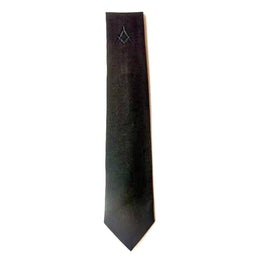

The Square and Compasses in Freemasonry : More Than Just a Symbol
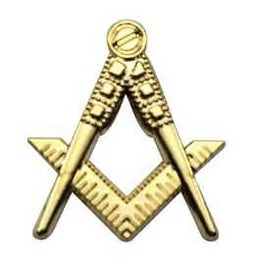
It can be found on the pediments of Masonic temples, as well as on aprons, jewellery, rings, gloves and, occasionally, watches and pins. In the collective imagination, the Square and Compasses have become the most recognisable emblems of Freemasonry. Their crossed silhouette is a visual signature, but their true significance is often obscured, even among initiates.
These two tools, borrowed from the art of the builder, have been present from the first steps in the lodge and are not simple decorations. In Freemasonry, the Square and Compasses form a symbolic structure in their own right. When worked separately and then together, they express a balance between rigour and openness, matter and spirit, and inner construction and universal order.
However, they should not be viewed as a logo, but rather as a word to be deciphered.
Symbols omnipresent in Freemasonry
In contemporary Freemasonry, few ritual or decorative objects bear no trace of the Square and Compasses. These two crossed tools appear on Master Mason aprons, tracing boards, pendants and cufflinks, and even on temple facades. They also appear in correspondence, summonses, books, and in some museums, wherever the tradition leaves visible traces.
Square and Compasses on a facade
This symbolic pairing is not reserved for Freemasons alone. It is also present in the world of the Compagnonnage, particularly in the French and German traditions. In Germany, for example, building tradesmen who are members of the Compagnonnage proudly display the Square and Compasses on their vehicles and in their logos. This iconographic proximity serves as a reminder of the shared origins of these tools, which were borrowed from the worlds of architecture and construction.
However, the Square and Compasses circulate so freely in the public arena because they represent more than just a sense of belonging. They carry symbolic power that transcends jurisdictions, degrees and eras. It is this deeper meaning that Freemasonry invites those who want to go beyond the decoration to explore.
The Square : checking, adjusting and containing
A fundamental tool of the stonemason's trade, the Square is, above all, a checking instrument. Contrary to popular belief, it was not used to draw right angles, but rather to verify their accuracy. Drawing angles was the job of other instruments, such as the ruler and the Compass. The Square came afterwards to confirm that what had been prepared was in the right proportions.
Freemasonry retains this function of control, measurement and rigour when it places the Square at the heart of its symbolism. It embodies rectitude and the demand for aligned work and conformity to a higher standard — not imposed from outside, but gradually internalised by the Freemason as they progress.
The Square is also the distinctive sign of the Worshipful Master, who presides over the lodge. Rather than drawing or building, he judges the direction of the collective work, ensuring that relationships are horizontal and making adjustments where necessary. Through his position and role, he embodies the spirit of the Square : not to impose, but to align ; not to condemn, but to contain.
The Compass : tracing, designing, opening
A mobile instrument, The Compass is used to draw circles, measure distances, and construct harmonious shapes from a given point. Unlike the Square, it does not check what is already there, but projects what is to come. The Compass symbolises intelligence in motion, measured openness and the ability to conceive a plan while respecting invisible proportions.
The G.A.O.T.U. wielding the Compass
In Freemasonry, the Compass often represents the spirit, in contrast to the matter symbolised by the Square. It signifies a way of thinking that cannot be improvised, but is instead ordered according to higher laws — geometric, cosmic and initiatory. Its very shape invites us to go beyond the right angle and draw circles, arcs, and spirals — all figures of expansion, momentum, and spiritual construction.
It is rarely found in isolation in symbolic lodges. However, it does appear in certain higher degrees, notably the 5th and 14th degrees of the Ancient Accepted Scottish Rite, as well as in the insignia of Grand Officers, such as the Grand Inspector of certain Grand Lodges. At these levels, the Compass becomes an emblem of spiritual authority, representing inner mastery based on knowledge of universal laws rather than domination.
The Square and Compasses : matter and spirit united
Together, the Square and Compasses form a coherent and structured symbolic pair that is almost cosmological. Their intersection is not merely decorative ; it symbolises tension, balance and articulation. The Square is fixed and marks the right angle. It refers to the created world, the visible realm and the stability of the Earth. The Compass, which is mobile, evokes the Sky, the invisible and the dynamics of the spirit.
This pairing is not unique to Freemasonry. It can be found in many ancient traditions. Earth and sky, passivity and activity, feminine and masculine, matter and spirit — these are all polarities whose union does not produce fusion, but order.
When Freemasonry incorporates these two working tools into its symbols, it is not displaying possession, but a project. The Freemason's art is not to oppose matter and spirit, but to adjust them to each other. In this pairing, neither dominates ; it is their interaction that sustains the temple.
Three Degrees, three Configurations : an initiatory progression
In the Ancient Accepted Scottish Rite — as in many other workings — the Square and Compasses are not just symbols ; their placement on the altar varies according to the degree. This detail is often observed without comment, but it nevertheless marks a precise, structured and meaningful initiatory progression.
In the first degree, that of Entered Apprentice, the Square is placed above the Compass. This indicates that matter still takes precedence over spirit, and that the work is external, visible, and contained within strict forms. The initiate is called upon to build himself up, to straighten himself out and to test himself through rigour.
In the second Degree, that of Fellowcraft, the Square and Compasses are intertwined. The initiate begins to perceive an interior order. Spirit and matter converse. Knowledge and an understanding of the world temper obedience to formal rectitude alone, as do the first symbolic readings.
In the third degree, that of Master Mason, the Compass is placed above the Square. The priority is reversed. The Master Mason moves from the Square to the Compass : he no longer relies solely on conformity, but on design. The building site becomes internal. The rule is no longer imposed; it is internalised.
This gradual reversal is not just a ritual decoration. Rather, it is a representation of a deeper transformation that affects not only the degrees, but also the life of the Freemason.
The Square and Compasses in the Chinese tradition
The Square and Compasses are not solely a part of Western heritage. They can also be found in certain ancient representations of imperial China, where they express an ordered vision of the world and society. A striking example of this is the mythical couple Fuxi and Nuwa, who are said to be the originators of Chinese civilisation : Fuxi holds a Square and Nuwa holds a Compass. He establishes the rules of society and she creates the bonds of marriage. Together, they represent the union of the earthly and the celestial, and the masculine and the feminine, within a ritualised framework.
Fuxi and Nuwa
The Chinese language retains this symbolic imprint. The word for 'worker' – 'Gong Ren' – is written by combining the character for 'man' with that for 'Square'. Therefore, to work literally means 'to be a man of the Square', i.e. to submit to a structuring order. Similarly, the expression 'Square and Compasses' is used in everyday language to designate a person of good reputation: reliable, upright, and conforming to expected standards. This is a distant but disturbing echo of the Masonic ideal of the 'free and of good report' Freemason.
Although these correspondences prove nothing, they serve as a reminder that the Square and Compasses are much more than just Masonic symbols. They are cultural archetypes that represent a universal concept of construction, harmony and regulation.
Conclusion
We often think we know the Square and Compasses because we have seen them everywhere. However, like all living symbols, they reveal nothing to those who merely observe them. You have to manipulate, question and go through them.
As working tools of the craft, they only make sense in a working context. In a lodge, this means working on oneself, working with others and working within an order. Taken separately, they already convey meaning. However, it is only when they are considered together that they reveal their full potential : a balance of tension and a possible axis between what weighs us down and what guides us.
It is therefore not so much their ritual use that is important, but rather the way they inhabit us. At every stage of life, the question arises again : am I still under the Square ? Have I earned the right to open the Compass ? Above all, are they on top of each other or against each other ?
Would you like to wear these symbols every day ? Check out our collection of Masonic pins featuring the Square and Compasses.


JE VEUX RECEVOIR LES ACTUALITÉS ET EXCLUSIVITÉS !
Restez au courant des nouveaux articles de blog, des nouveautés et promotions Nos Colonnes.
