





The Two Pillars in Freemasonry : Between Memory, Silence, and Passage
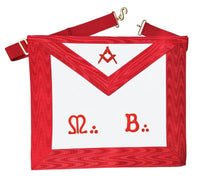
The Two Pillars are among the oldest and most enduring symbolic landmarks of Freemasonry. They feature on tracing boards, aprons and symbolic jewels.Their presence is undisputed, yet their meaning remains unclear. For the Pillars in Freemasonry are neither part of static decor nor a legacy with a single interpretation. Rather, they interweave the Bible, operative usages and modern ritual history. Behind them lies a broader question: what do we truly convey by placing them at the heart of the initiatory journey ?
1. The Biblical Origins of the Pillars
The two pillars in Freemasonry are rooted in the account of the construction of Solomon’s Temple. References to them can be found in the First Book of Kings (7:13–22) and the Second Book of Chronicles (3:15–17). According to these texts, King Solomon had two bronze pillars erected at the entrance to the sanctuary. The First Book of Kings specifies that they were crafted by a man named Hiram, who was sent by the King of Tyre. One was called Yakîn (or Jachin in Masonic rituals) and the other Bo‛az (or Boaz or Booz in the rituals).

Two Pillars, Grand Temple, London
Their dimensions vary slightly depending on the biblical version, but their placement is clear: standing outside, they flanked the entrance to the Temple, which faced east to welcome the rising sun. Yakîn stood on the right and Bo‛az on the left, provided one follows the Hebrew orientation. This is not without consequence in Masonic rituals.
2. Right or left ? North or south ? The Enigma of Orientation
The positioning of the two pillars in Freemasonry has long been the subject of debate and uncertainty. Are they on the right or the left ? To the north or south ? The answer depends on the orientation adopted — and this is where the question becomes more complex.
For us today, north is the standard reference point. It is the top of the map and a fixed direction. But in the Hebrew Bible, it is the east — the rising sun — that determines orientation. The word 'orient' itself bears witness to this : to orient oneself is to turn towards the east. From there, right becomes south and left becomes north. In Hebrew, yamin, meaning 'right', also means 'south'.
This reversal sheds light on ritual differences. Adopting the Hebrew orientation places the pillar Yakîn to the south and Bo‛az to the north. The so-called 'Ancient' rites that have preserved this arrangement include the Ancient Accepted Scottish Rite, Emulation and York. In contrast, the so-called 'Modern' rites, such as the French Rite and the Rectified Scottish Rite, deliberately inverted this arrangement — likely to distinguish themselves from the Ancients, render words of recognition from exposures ineffective and more reliably identify unwelcome visitors.
3. Lodge or Temple ? The question of the Masonic space
Once the position of the pillars has been established, another question arises: does the Masonic lodge represent Solomon's Temple ? At first glance, the correspondence seems obvious. However, on closer inspection, a difference becomes apparent.
Solomon’s Temple was oriented from east to west. Entry was through the east, moving towards the west. In this configuration, Yakîn, the pillar to the south, stood to the left of the entrance, while Bo‛az, the pillar to the north, stood to the right. This arrangement is consistent with biblical texts.
Solomon’s Temple
However, the Masonic Lodge is oriented in the opposite direction, from west to east. Entry is from the west, progressing towards the east. If the pillars retain their biblical orientation, with Yakîn to the south and Bo‛az to the north, then the person entering the lodge would see Yakîn on the right and Bo‛az on the left. This configuration is used in the so-called Ancient Rites.
However, it must be acknowledged that : The Lodge and the Temple do not overlap. And this is unlikely to be a mistake. Some early rituals answer the question 'Where was the first Lodge held ?' with the phrase 'Upon the porchway of King Solomon's Temple.'
This is not the sacred space, but the site of the work. The Temple has yet to be built. The lodge is not a replica of the Temple, but rather its threshold or mirror.
4. The Masonic Word : A Fragmentary Transmission
One of the major sources of speculative Freemasonry is the Mason Word tradition, a hybrid form attested in Scotland as early as the turn of the seventeenth century. It is within this still-operative framework that individuals who did not belong to the Craft were admitted for the first time. They were known as Accepted Masons. Their names appear in the records of Scottish lodges as early as 1600.
These Accepted Masons were typically men of standing, such as magistrates and landowners, and sometimes ministers of religion. They brought their influence and financial support to the lodges. However, the working masons did not impart all of their knowledge to them. Instead, during a ritual ceremony, they were entrusted with a word of recognition : the 'Mason Word'. The exact content of this word remains elusive, but one thing is certain : it included the names of the two pillars.

The Two Pillars
This fragment alone was enough to establish a symbolic space. Transmitting the names Yakîn and Bo‛az was enough to create a symbolic architecture. There was no system, no degrees and no initiatory structure yet. But there was a threshold, a word and a passage.
5. The Forgotten Legend of the Two Pillars
Speculative Freemasonry based its symbolism on the biblical pillars of Solomon’s Temple. However, it overlooked another, much older tradition : the legend of the two pillars of preservation. This legend appears in the Old Charges, which are texts blending operative regulations with mythical accounts of origin and were composed between the late fourteenth and eighteenth centuries.
According to the legend, Lamech's children — Jabal, Jubal, Tubal-Cain and Naamah — foresaw the destruction of the world by either fire or water. In order to preserve knowledge of the crafts, they engraved their secrets onto two pillars : one of marble to withstand fire, and the other of brick to resist water. This tradition is linked to an even older Jewish source reported by Flavius Josephus in the first century, in which Enoch erects two pillars to preserve knowledge.
It is interesting that this legend, which was well known among English operative masons, was not adopted by the first speculative Freemasons. It could have enriched the symbolism of the Temple's two pillars. Only faint echoes remain, for example in some versions of the thirteenth degree of the Ancient Accepted Scottish Rite. The rest has been lost — or fallen silent.
Conclusion – Two Pillars, a Thousand Perspectives
The two pillars in Freemasonry do not represent a fixed teaching. Their presence spans the ages, yet their meaning slips away the moment you try to grasp it. Sometimes guardians of the Temple, sometimes spatial markers, sometimes symbols passed on through a word — they shift endlessly across rituals, degrees and memory.
They are seen, named and crossed. However, depending on one's position, the Lodge one enters or the rite one follows, their position changes. Perhaps that is their true teaching: that between Boaz and Jachin, there is no truth to be recovered, only a passage to be lived through.
By Ion Rajolescu, editor-in-chief of Nos Colonnes, dedicated to delivering an accurate, rigorous and vibrant Masonic message.
Keen to explore the symbolism of the masonic robes further ?
Have a look at our collection of tracing boards, which often feature them.
_______________________________________________FAQ – The Pillars in Freemasonry
1. What do the two pillars represent in Freemasonry ?
They symbolise the pillars of Solomon’s Temple mentioned in the Bible, often interpreted as markers of stability, transition, and duality along the initiatory path.
2. What are the names of the Masonic pillars ?
They traditionally bear the Hebrew names Boaz (or Booz) and Jachin, drawn from the First Book of Kings and the Second Book of Chronicles.
3. Why do some Lodges reverse the position of the pillars ?
This inversion stems from an old divergence between the so-called “Ancients” and “Moderns,” related to ritual orientation and symbolic recognition.
4. Which pillar is assigned to Entered Apprentices ?
It depends on the rite. In the “Ancients,” Apprentices sit at the Boaz pillar ; in the “Moderns,” at the Jachin pillar — but in both, it is the North.
5. Does the Lodge reproduce Solomon’s Temple ?
Not exactly. According to several old rituals, the Lodge rather represents the forecourt of the Temple — the working space of the builders — not the sacred sanctuary itself.
6. What is the “Mason Word” and how is it linked to the pillars ?
The Mason Word, used in certain Scottish Lodges since the 17th century, included the names of the two pillars as part of a password or means of recognition.
7. Is there a Masonic legend about the pillars ?
Yes. The Old Charges recount a legend in which the sons of Lamech or Enoch inscribed ancient knowledge onto two pillars to preserve it from a coming destruction.
8. Why aren’t the pillars always on the same side ?
Because not all Masonic rites have kept the same symbolic orientation. In the “Ancients,” Jachin is to the right and Boaz to the left when entering the Lodge. The “Moderns” reversed this to distinguish themselves and avoid recognition through outdated passwords.
9. Are pillars present in all Masonic Lodges ?
Yes, most Lodges include two pillars: often placed at the entrance, sometimes represented as small columns on the Wardens’ pedestals, or drawn on the floor cloth. Their position and form vary by rite, but their symbolic presence is constant.
10. Do the pillars carry a spiritual meaning ?
They mark a passage — a threshold between two states, a beginning of a journey. Their significance goes beyond decoration: they orient, shift, and provoke inner reflection.


I WANT TO RECEIVE NEWS AND EXCLUSIVES!
Keep up to date with new blog posts, news and Nos Colonnes promotions.
