







Sephirotic Tree and Freemasonry
The Sephirotic Tree holds a central place in the Kabbalistic tradition. Complex and radiant, it expresses the relationship between divine unity and the multiplicity of the world. Since the twentieth century, some Freemasons have seen in it a fruitful framework, comparing the pillars of the lodge and the officers’ college to the structure of the Sephirotic Tree. In 1948, Jules Boucher even suggested linking it to the thirteenth degree of the Ancient Accepted Scottish Rite (AASR). This interest is neither universal nor part of official ritual, but it reflects the vitality of a symbolic inquiry that constantly seeks coherence. To explore the Sephirotic Tree is to examine the ways in which Freemasonry engages in dialogue with the Kabbalistic tradition.
- 1. The Sephirotic Tree: roots in the Kabbalistic tradition
- 2. The Sephirotic Tree and the pillars of the lodge
- 3. The Sephirotic Tree and the officers’ college
- 4. The Sephirotic Tree and the Wardens’ place in the lodge
- 5. The Sephirotic Tree and the thirteenth degree of the AASR
- 6. The Sephirotic Tree as a Masonic hermeneutical tool
- 7. The Sephirotic Tree and the contemporary quest for initiation
- 8. Podcast — Sephirotic Tree and Freemasonry
The Sephirotic Tree: roots in the Kabbalistic tradition
The Sephirotic Tree is rooted in the Kabbalistic tradition, conceived as a map of creation and of consciousness. Composed of ten Sephiroth arranged in three columns, it describes the process through which the infinite divine unfolds into the multiplicity of the world. Each Sephirah embodies a mode of emanation and corresponds to a stage in the spiritual journey:
- Keter (Crown): the first emanation from the Ein Sof — the Divine Infinite, beyond all representation. It marks the passage from the unknowable to perceptible expression, containing in seed form the whole unfolding of the Tree.
- Chokmah (Wisdom): the creative impulse, the power of initiative.
- Binah (Understanding): reflection, the matrix of all form.
- Chesed (Mercy): expansive generosity, active loving-kindness.
- Geburah (Severity): the strength of discernment, justice that restrains.
- Tiphereth (Beauty): the central balance, the harmonising light.
- Netzach (Victory): vital energy, perseverance in action.
- Hod (Glory): rational intelligence, clarity of language.
- Yesod (Foundation): the link between the invisible and the visible, the world of images.
- Malkuth (Kingdom): concrete fulfilment, our earthly world.
The Sephirotic Tree
The Sephirotic Tree is therefore not merely a theoretical diagram: it is a path of meditation, intended to guide the initiate in the work of inner ascent. Different Kabbalistic schools propose varying readings of the Tree, yet all agree on its function as a bridge between the divine and the human, between heaven and the inner temple.
The Sephirotic Tree and the pillars of the lodge
In Freemasonry, three pillars — Wisdom, Strength, and Beauty — uphold the lodge and guide the work of its members. The Sephirotic Tree, arranged in three columns, offers a symbolic correspondence with this Masonic architecture. On the right, the column of Mercy descends from Chokmah to Netzach and can be likened to Wisdom, the source of inspiration and guidance. On the left, the column of Severity runs from Binah to Hod and corresponds to Strength, the energy of limitation and justice. At the centre, the axis of balance stretches from Keter to Malkuth and is reflected in Beauty, the harmony that unites opposites.
This connection between the Sephirotic Tree and the pillars of the lodge is not found in any official ritual. It is a modern symbolic interpretation that emerged in the twentieth century, emphasising the universality of a ternary dynamic in which balance arises between two polarities. Jules Boucher, in particular, highlighted this analogy, seeing in the correspondence between Wisdom, Strength, and Beauty and the three Sephirothic columns a key to deepening the symbolic reading of the lodge. Other authors have followed him, confirming that the Sephirotic Tree can serve as a mirror for the traditional structures of Masonic practice.
The Sephirotic Tree and the officers’ college
The officers’ college is the living backbone of the lodge. Each officer fulfils a specific function that contributes to the harmony of the whole. Some modern authors, notably Jules Boucher, have suggested comparing this organisation with the Sephirotic Tree, establishing correspondences between Masonic offices and the ten Sephiroth.
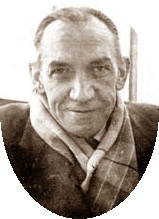
Jules Boucher, 1902-1955
In this reading, the Worshipful Master is linked to Keter, the principle of sovereignty and leadership. The Senior Warden is associated with Chokmah, Creative Wisdom, while the Junior Warden corresponds to Binah, Organising Understanding. Other offices have been related to Chesed and Geburah, expressing the balance between generosity and rigour, or to Yesod, the foundation that ensures transmission.
These correspondences do not claim to impose a rule, but to provide a framework for meditation. By relating the Sephirothic Tree to the officers’ college, some authors have sought to emphasise that the lodge functions as a symbolic organism, where each office finds its place within a greater dynamic. Such an interpretation does not alter ritual practice, but it illuminates the meaning of Masonic work by placing it in dialogue with an older tradition.
The Sephirotic Tree and the Wardens’ place in the lodge
The question of the Wardens’ place illustrates the limits of these correspondences. In some interpretations, the Senior Warden is linked to Chokmah, while the Junior Warden is associated with Binah. Yet in a Craft Lodge working the Ancient Accepted Scottish Rite, the Senior Warden is placed near column B, to the northwest. The Junior Warden stands on the side of column J, to the south or southwest, depending on custom. This arrangement complicates the comparison with the Sephirothic Tree, as it does not coincide with the classical topography of the Sephiroth.
Such discrepancies reveal that the analogy between the Sephirothic Tree and the lodge is never mechanical. It invites reflection on the real function of the officers and on how their positions within the lodge express a balance proper to the Masonic tradition. The Tree thus serves as a basis for symbolic comparison rather than a fixed map, encouraging meditation on the diverse forms that initiatory harmony can assume.
The Sephirotic Tree and the thirteenth degree of the AASR
The thirteenth degree of the Ancient Accepted Scottish Rite (AASR), known as the Royal Arch, occupies a singular place in Masonic progression. It recounts the discovery of an underground vault made up of nine arches, within which the sacred Name shines forth at the heart of the Temple of Enoch. This initiatory drama confronts the Freemason with a hidden secret, preserved in an architecture concealed beneath the very floor of the Temple.

The descent into the crypt, 13th degree AASR
In the mid-twentieth century, Jules Boucher proposed a new interpretation: to read the structure of this degree in the light of the Sephirotic Tree. From this perspective, the arches become stages in the passage through the Sephiroth. The initiatory journey leads from the summit of Keter down to Malkuth, as though the initiate were traversing the entire Tree to reach the ineffable Name at the end. This parallel gave Kabbalistic coherence to a degree whose symbolism was already rich, though less structured.
Boucher did not limit himself to the ten classical Sephiroth. He introduced the idea of an eleventh gate, corresponding to Da‘ath, “Knowledge”. This particular Sephirah does not always appear in traditional diagrams: it is neither fully included nor wholly absent. It is sometimes described as a “non-Sephirah”, an abyss or threshold between Binah and Chokmah. By including it in the thirteenth degree, Boucher suggested that the initiatory path was not merely a descent, but involved an additional crossing — the crossing of the very boundary between light and darkness, knowledge and ignorance.
This bold reading was later taken up and developed by contemporary authors such as Percy John Harvey. Harvey expanded the logic of correspondences, seeing in the underground vault an initiatory equivalent of the Sephirotic Tree, and in Da‘ath the key to a deeper understanding of the degree. In this way, initiation becomes not only the discovery of a sacred Word, but the crossing of the abyss that separates the human from the divine.
This interpretation does not belong to ancient tradition: it is the fruit of a modern sensibility, born in France in the 1940s and 1950s. Yet it has left a lasting mark on the Masonic imagination. By linking the thirteenth degree with the Sephirothic Tree, Boucher and his successors opened a new path for understanding the symbolism of the vaults and of the Sacred Name, situating the AASR within the dialogue between Freemasonry and the Kabbalistic tradition.
The Sephirotic Tree as a Masonic hermeneutical tool
The Sephirotic Tree does not impose itself as a standard, but it can serve as a fruitful tool of interpretation for Freemasonry. By relating the pillars of the lodge, the officers’ college, and certain degrees of the AASR to the structure of the Sephiroth, it offers a transversal framework for understanding. The initiate then discovers that each function, each office, and each initiatory stage can be read as an emanation, a balance, or a tension between complementary polarities.
This hermeneutic invites us to see the lodge as an image of the universe, ordered by principles of mercy, severity, and harmony. It also shows that the Sephirothic Tree is not only an inheritance of the Kabbalistic tradition, but that it can be used as a tool to deepen the meaning of Masonic work. By bringing these two symbolic universes into dialogue, Freemasons are led to unite what once seemed separate: the heritage of Kabbalah and the practice of the lodge.
The Sephirotic Tree and the contemporary quest for initiation
By exploring the Sephirotic Tree, Freemasonry has found a language capable of linking the Kabbalistic tradition with its own symbolic universe. Parallels with the pillars of the lodge, the officers’ college, and the thirteenth degree of the AASR have broadened the interpretation of the Temple and introduced a new dynamic. These correspondences are not prescriptions but invitations: they encourage us to see in each function, each degree, and each stage of the initiatory path a possible resonance with the ten Sephiroth.
This quest remains relevant today. By placing the Sephirothic Tree alongside the structures of the lodge, Freemasons are invited to meditate on the unity that links the divine and the human, the visible and the invisible, emanation and manifestation. It is a way of reminding us that initiation is not only the transmission of a heritage, but also the opening to a living tradition, always ready to be reread and deepened.
By Ion Rajolescu, Editor-in-Chief of Nos Colonnes — committed to a just, rigorous, and lively Masonic voice.
Deepen your journey with our collection of regalia for Degrees 4 to 14 of the Ancient Accepted Scottish Rite — Nos Colonnes.

1. What is the Sephirotic Tree in the Kabbalistic tradition?
The Sephirotic Tree is a diagram from the Kabbalistic tradition. It represents ten Sephiroth arranged in three columns, expressing the descent of divine emanations into the manifested world.
2. What is the meaning of the ten Sephiroth of the Sephirotic Tree?
Each of the ten Sephiroth of the Sephirotic Tree embodies a spiritual quality: Keter the Crown, Chokmah Wisdom, Binah Understanding, down to Malkuth, the earthly Kingdom.
3. Does the Sephirotic Tree appear directly in Freemasonry?
The Sephirotic Tree does not appear in any craft lodge ritual. However, modern authors have compared it to the structure of the Temple and the officers’ college, and it has been introduced in some interpretations of the 13th degree of the Ancient Accepted Scottish Rite (AASR).
4. How can the Sephirotic Tree be related to the three Masonic pillars?
The three pillars of Wisdom, Strength, and Beauty find a symbolic correspondence with the columns of the Sephirotic Tree: Mercy, Severity, and Balance.
5. What place does the college of officers occupy in the Sephirotic Tree?
Some authors, notably Jules Boucher, suggested associating lodge officers with the ten Sephiroth of the Sephirotic Tree, making the Temple a mirror of spiritual emanations.
6. What is the position of the Wardens in relation to the Sephirotic Tree?
In the Ancient Accepted Scottish Rite (AASR), the Senior Warden is placed near column B and the Junior Warden near column J, to the South or Southwest. This arrangement does not always match the traditional layout of the Sephirotic Tree, which makes symbolic correspondences variable.
7. Why is the 13th degree of the AASR linked to the Sephirotic Tree?
The 13th degree of the Ancient Accepted Scottish Rite (AASR), known as the Royal Arch, has been interpreted by Jules Boucher as a symbolic journey through the Sephirotic Tree, with each arch corresponding to a Sephira.
8. What does Da‘ath represent in the Sephirotic Tree and in Freemasonry?
Da‘ath, which literally means “knowledge” in Hebrew, is not counted among the ten traditional Sephiroth. It is described as a threshold between Chokmah and Binah. Jules Boucher did not include it in his reading of the 13th degree of the Ancient Accepted Scottish Rite (AASR). More recent authors, such as Percy John Harvey, have linked Da‘ath to an “eleventh gate,” symbolizing the crossing of the abyss between knowledge and ignorance.
9. Can the Sephirotic Tree be used for Masonic meditation?
Yes. Outside of any official ritual, the Sephirotic Tree is used by some Freemasons as a tool for meditation, to reread the structure of the lodge and deepen their symbolic work.
10. What is the contemporary significance of the Sephirotic Tree in Freemasonry?
Today, the Sephirotic Tree remains a hermeneutical tool: it encourages reflection on the unity between Kabbalistic tradition and Freemasonry, and on the initiatory quest at the heart of the Temple.
Find here the full transcript of the episode for those who prefer reading or wish to delve deeper into the discussion.
Podcast — Sephirotic Tree and Freemasonry
The Sephirothic Tree occupies a central place in Kabbalistic tradition. A complex and luminous figure, it describes the relationship between divine Infinity and the multiplicity of the world. Since the twentieth century, some Freemasons have found in it a fertile interpretive framework, drawing parallels between the pillars of the lodge, the college of officers, and even certain degrees of the Ancient and Accepted Scottish Rite with the structure of the Sephirothic Tree. This interest is not universal, but it demonstrates the vitality of a symbolic quest always searching for coherence. Exploring the Sephirothic Tree means questioning the way Freemasonry engages in dialogue with traabbalistic tradition.
The Sephirothic Tree is rooted in the Kabbalistic tradition, which conceived it as a map of creation and consciousness. Composed of ten Sephiroth arranged in three columns, it describes the passage from the unknowable Infinity, the Ein Sof, to manifestation. Keter, the first emanation, contains the entire tree in potential. Chokmah embodies the creative impulse. Binah, the understanding that structures. Chesed expresses generosity. Gevurah, the rigor of discernment. Tiphereth, the beauty that balances. Netzach, perseverance. Hod, the clarity of language. Yesod, the foundation that connects the invisible and the visible. Finally, Malkuth, the Kingdom, the acavily in our earthly world.
This tree is not just a diagram: it becomes a path for meditation, a link between the divine and the human, between the sky and the inner temple.
In Freemasonry, three pillars support the lodge: Wisdom, Strength, and Beauty. The Sephirotic Tree, with its three columns, offers a symbolic correspondence with this architecture. The Pillar of Mercy, on the right, evokes Wisdom. The Pillar of Severity, on the left, corresponds to Strength. The central axis, from Keter to Malkuth, refers to Beauty. This parallel is not presented in any lodge ritual. It is an interpretation that appeared in the twentieth century. Jules Boucher, among others, suggested that the Sephirotic Tree could serve as a mirror for the traditional structures of the lodge.
The college of officers illustrates this same search for correspondences. The Worshipful Master can be associated with Keter, the Crown. The Senior Warden, with Chokmah, Wisdom. The Junior Warden, with Binah, Understanding. Other offices are linked with Chesed, Geburah, or even Yesod. These correspondences are not intended to impose a rule, but rather to provide a framework for meditation. They invite one to view the lodge as a symbolic organism, where each office contributes to a greater dynamic.
The question of the position of the Wardens nevertheless reveals the limits of these comparisons. The First is near column B, in the Northwest. The Second stands in the South, or Southwest, on the side of column J. This arrangement does not coincide with the classical topography of the Sephirotic Tree. The analogy, therefore, cannot be a mechanical one. Rather, it prompts us to reflect on the true function of the officers and the way in which their position expresses the particular balance of the Masonic tradition.
The thirteenth degree of the Ancient and Accepted Scottish Rite, known as the Royal Arch, has also been interpreted in the light of the Sephirothic Tree. Jules Boucher suggested associating the arches of the vault with the ten Sephiroth. The journey thus becomes a passage through the Tree, from the summit of Keter to the Kingdom of Malkuth. Some more recent authors, such as Percy John Harvey, have added Daath, Knowledge, between Chokmah and Binah. This eleventh gate would mark the crossing of an abyss, between knowledge and ignorance. These modern interpretations are not ancient, but they enrich the symbolism of the degree.
Thus, the Sephirotic Tree becomes a hermeneutic tool for Freemasons. It does not alter the rituals, but offers an interpretive framework that brings Kabbalah and Freemasonry into resonance. It invites us to see the lodge as an image of the universe, ordered by principles of mercy, rigor, and harmony.
In conclusion, the Sephirotic Tree, when viewed alongside the structures of the lodge, invites reflection on the unity between the divine and the human, emanation and manifestation. It serves as a reminder that initiation is not merely the transmission of a heritage, but an opening to a living tradition, one that must always be revisited and deepened.


I WANT TO RECEIVE NEWS AND EXCLUSIVES!
Keep up to date with new blog posts, news and Nos Colonnes promotions.
