



Tubal Cain, the enigma of the Masonic password
Among the biblical names that appear in Masonic rituals, Tubal Cain occupies a singular place. Less prominent than Solomon or Hiram, he is nonetheless central, for his name serves as a password in several rites: in the French Rite, in Emulation, and in the Ancient Accepted Scottish Rite. Descendant of a cursed lineage and ancestor of blacksmiths, Tubal Cain fascinates through his ambiguity: creator or transgressor, initiator or threat? Why did Freemasonry choose to place his name at the very threshold of the initiatory Temple?
- 1. Who Was Tubal Cain in the Bible: a Blacksmith or a Cursed Ancestor?
- 2. The Status of the Blacksmith: Craftsman of Fire or Troubling Figure?
- 3. Masonic Contradiction: Why Glorify Those Who Work with Metals?
- 4. A Cursed Lineage: the Weight of Cain’s Legacy
- 5. The Old Charges and the Legend of the Two Pillars
- 6. The Eighteenth Century and the Influence of Alchemy
- 7. Conclusion
- 8. Podcast – Tubal Cain, the Enigma of the Masonic Password
Who Was Tubal Cain in the Bible: a Blacksmith or a Cursed Ancestor?
The Book of Genesis (chapter 4) presents Tubal Cain as the son of Lamech and the progenitor of all blacksmiths. His half-brothers Jabal and Jubal are remembered as the ancestors of shepherds and musicians, while his sister Naamah, in medieval tradition, became the first weaver. Thus emerges a genealogy that marks the origins of the arts and crafts.
.jpg)
Tubal Cain, biblical ancestor of blacksmiths, depicted by Andrea di Bonaiuto at Santa Maria Novella, Florence (circa 1366-1368).
Yet the identity of Tubal Cain remains enigmatic. Tubal can be linked to Têbêl (the world), to Yabal (to bring), or to the name of an ancient people established in a region rich in minerals. Cain first refers to the metal spear, but it can also be derived from Qanah (to acquire), Qana’ (to envy), or Qyn (to sing a lament). Some interpret him as the archetypal blacksmith, while others see in him a cursed heir, marked by jealousy and bloodshed. Is Tubal Cain the inspired ancestor of artisans, or the bearer of a lineage doomed to sin?
The Status of the Blacksmith: Craftsman of Fire or Troubling Figure?
In most ancient civilizations, the blacksmith held an ambiguous position. Master of fire, he commanded a power beyond the reach of ordinary mortals. By transforming raw matter into tools or weapons, he crossed a threshold and began to rival the gods themselves. This unsettling power explains why many traditions placed blacksmiths on the margins of society—respected for their art, yet kept at a distance for the danger they embodied.
Mythology abounds with such examples. The Greeks attributed to Hephaestus a crucial role in forging the weapons of the gods, yet depicted him as lame, a deformity that reflected the ambivalence of his genius. The Romans linked Vulcan to volcanoes, places of both creation and destruction. In Egyptian mythology, Ptah was associated with the creative craftsman, while Seker was revered as a blacksmith god. Yet he was also a deity of the underworld, tied to death and the afterlife. This dual identity—as craftsman of fire and guardian of the beyond—gave him a dark aura that epitomizes the ambivalence of forging.
In this context, Tubal Cain is understood less as a simple craftsman and more as a biblical Prometheus. By harnessing fire to work metals, he placed in human hands a telluric force that exceeded mere domestic use. Should he be honoured as the transmitter of foundational knowledge, or feared as the one who brought into the world the risk of violence and destruction?
Masonic Contradiction: Why Glorify Those Who Work with Metals?
Upon entering the lodge, the Entered Apprentice is asked to renounce metals, symbols of material wealth and worldly attachments. This renunciation marks a necessary break in order to begin the Masonic work of purification and stripping away. How, then, are we to understand that Tubal Cain, the ancestor of blacksmiths, was chosen as a password? A man who works with metals embodies the very opposite of what the ritual demands.
Attentive to such contradictions, Jean-Baptiste Willermoz decided in 1785 to replace Tubal Cain with Phaleg in the Rectified Scottish Rite. The decision was not the fruit of his own speculation alone: he was following the instructions of Madame de Vallière, a mystic from Lyon who, under the name “Unknown Agent,” communicated her supposed revelations to a circle of Freemasons drawn to mesmerism and placed under her influence. Inspired by these Illuminist writings, Willermoz adopted the substitution. Yet the solution seems even more troubling: Phaleg, whose name means “division,” is associated with the Tower of Babel, symbol of human pride and the scattering of peoples. To abandon metals only to embrace division and pride—what a paradox indeed!
The contrast becomes even sharper: while Freemasonry asks the initiate to leave behind what Tubal Cain represents, it also inscribes his name at the very heart of the ritual. Is this an unresolved contradiction, or an invitation to explore the mystery of transgression itself—where the cursed blacksmith paradoxically becomes a guardian of the threshold?
A Cursed Lineage: the Weight of Cain’s Legacy
The name Tubal Cain cannot be understood apart from the dramatic history he inherited. According to Genesis, Adam and Eve had two sons: Cain and Abel. When Cain killed his brother out of jealousy, he fell under God’s curse: “Cursed are you from the ground, which has opened its mouth to receive your brother’s blood” (Genesis 4:11). From that moment, his descendants were marked by rupture and wandering. Tubal Cain, as a direct heir of this line, carried the enduring shadow of fratricide.
By contrast, biblical tradition recounts the birth of a third son, Seth, whose descendants were blessed and formed the righteous lineage. Thus, a symbolic chasm opens between the sons of Cain and those of Seth: on one side jealousy and bloodshed; on the other, fidelity to God. By placing Tubal Cain at the heart of Masonic ritual, do we not, paradoxically, introduce the shadow of the curse into a path of initiation meant to be a quest for light?
The Old Charges and the Legend of the Two Pillars
To understand why Tubal Cain appears in Masonic imagery, we must turn to the Old Charges, written between the late fourteenth and eighteenth centuries. All of these texts contain a “legendary history of Masonry,” tracing the transmission of the arts from the earliest biblical times. The four children of Lamech are often mentioned: Jabal, Jubal, Naamah, and Tubal Cain.

Folio from the Inigo Jones Manuscript (circa 1725) mentioning the legend of the two pillars.
The use of Tubal Cain as a Masonic password appears in the first half of the eighteenth century. Neither Masonry Dissected from 1730, nor the Bern Manuscript (circa 1740–1744) mention it. But by 1745, The Order of the Free-Masons Betrayed (L’Ordre des Francs-Maçons trahi) attests to it, while noting that this usage was not widespread in all lodges. This chronological reference clearly situates the introduction of the name: a time when many Freemasons saw their ceremonies as reflecting the mysteries of the Great Work.
According to the legend, foreseeing that God would destroy the world either by fire or by water, they engraved the secrets of their arts on two pillars: one of marble, to withstand fire, and one of brick, to withstand water. After the Flood, the pillars were found. Tradition adds that Pythagoras discovered one pillar, while Hermes found the other, thus ensuring the continuity of knowledge.
This legend left a lasting imprint on the imagination of operative and later speculative masons. Yet Tubal Cain does not play a greater role than his siblings. The true central figure is the pair of pillars themselves, symbols of the preservation of knowledge. Why, then, has modern Freemasonry retained only the name of Tubal Cain, and not that of his companions, as a password?
The Eighteenth Century and the Influence of Alchemy
The use of “Tubal Cain” as a Masonic password emerged in the first half of the eighteenth century. Neither Masonry Dissected (1730) nor the Bern Manuscript (c. 1740–1744) mention it. By 1745, however, The Order of Freemasons Betrayed does, while noting that the practice was not yet widespread in all lodges. This situates the appearance of the name in a period when many Freemasons saw their ceremonies as reflecting the mysteries of the Great Work.

“The Crystal Coffin,” engraving by Johann Daniel Mylius (1622): the king and queen in putrefaction, surrounded by allegories of death and time—an essential stage of the alchemical Work.
In Enlightenment Europe, alchemy inspired an ambiguous fascination: for some, a spiritual discipline; for others, a material quest for transmutation. To affirm that Tubal Cain was the first man to work metals could only attract the attention of initiates passionate about esoteric speculation. The biblical blacksmith thus became a fitting emblem, a discreet banner, proclaiming that the threshold of initiation was the alchemical work itself.
The choice was far from accidental. Both the first and third degrees, where Tubal Cain is invoked, dramatize a symbolic death followed by rebirth. Alchemy rests on the same dialectic: dissolution and coagulation, putrefaction and transmutation, the death of lead and the birth of gold. Tubal Cain, ancestor of blacksmiths, thus becomes a coded hope—that the fire of the athanor might light the path to initiatory regeneration.
Conclusion
Tubal Cain concentrates all the contradictions of Masonic imagination. Inspired blacksmith or cursed descendant, ancestor of the arts or bearer of bloodshed, he embodies both the mastery of fire and the weight of transgression. Freemasonry, which requires the Entered Apprentice to lay aside metals, has chosen as a password the very name of the one who forged them. Is this an unresolved paradox, or an implicit affirmation that initiation must pass through the encounter with shadow?
In adopting Tubal Cain as a password, the lodges of the eighteenth century were signalling more than a biblical reminiscence. They pointed toward an alchemical program: the promise that through symbolic death and transmutation, the initiate might be reborn to a higher light. Under a biblical name with troubling resonances, it is the enigma of the Masonic path itself that is expressed—that light can only be reached by a passage through fire.
By Ion Rajolescu, Editor-in-Chief of Nos Colonnes — committed to a just, rigorous, and lively Masonic voice.
Continue your exploration with our article on the Two Pillars, where the legend of preserved knowledge takes on its full meaning.

FAQ – Tubal Cain in Freemasonry
1. Who is Tubal Cain in the Bible?
Tubal Cain is mentioned in the Book of Genesis as the son of Lamech and the ancestor of blacksmiths. He is described as the first to work with metals, embodying both creative power and ambiguity.
2. Why is Tubal Cain seen as a cursed figure?
Tubal Cain descends from Cain, who killed his brother Abel. Cain’s lineage was marked by divine curse, and Tubal Cain inherited this shadow of fratricide and exile.
3. What role does Tubal Cain play in Freemasonry?
In several Masonic rites, Tubal Cain is used as a password at the first or third degree. His name signals the threshold of initiation and links Masonry to fire, metals, and transformation.
4. Why must the Entered Apprentice abandon metals if Tubal Cain represents them?
This paradox lies at the heart of the mystery. The Entered Apprentice lays aside metals to enter purified, yet the password reminds him that inner transformation passes through matter and fire.
5. Why did Willermoz replace Tubal Cain with Phaleg in the Rectified Scottish Rite?
In 1785, Jean-Baptiste Willermoz followed the guidance of Madame de Vallière, known as the “Unknown Agent,” who communicated mystical revelations to his circle. Inspired by these writings, he replaced Tubal Cain with Phaleg, a biblical figure of “division” linked to the Tower of Babel.
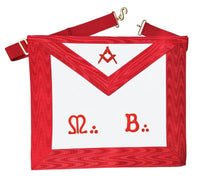
6. What is the meaning of the “Two Ball Cane” rebus?
In the Anglo-Saxon world, some Masons discreetly wore a symbol showing a cane flanked by two balls. This visual pun — “Two Ball Cane” — echoes the name Tubal Cain.
7. How is Tubal Cain connected to the Old Charges?
The Old Charges, medieval texts of operative Masonry, recount the legend of Lamech’s children. Tubal Cain, with his siblings, engraved the secrets of their arts on two pillars meant to survive fire or water, preserving knowledge after the Flood.
8. Why did 18th-century Masons find Tubal Cain fascinating?
At that time, many saw Freemasonry through the lens of alchemy. Tubal Cain, as the first blacksmith, embodied transmutation and the Great Work, making his name an emblem of esoteric transformation.
9. What does the name Tubal Cain mean?
Its etymology is debated: Tubal may relate to “world,” “to bring,” or to an ancient mining people, while Cain can mean “spear,” “to acquire,” “to envy,” or “to possess.” Some interpret the name as “possession of the world.”
10. Why does Tubal Cain remain a Masonic enigma?
Because he embodies contradictions: a cursed descendant yet a Masonic password, the archetype of metals when the initiate is told to abandon them. Tubal Cain thus personifies the shadow side of initiation, the transgressive step toward light.
Read the full transcript of the episode here for those who prefer reading or want more detail.
Podcast – Tubal Cain, the Enigma of the Masonic Password
Among the biblical names that appear in Masonic rituals, Tubal Cain occupies a singular place. Less prominent than Solomon or Hiram, he is nonetheless central. His name becomes a password in several rites, from the French Rite to Emulation, and even the Ancient Accepted Scottish Rite. Descendant of a cursed lineage, ancestor of blacksmiths and master of fire, Tubal Cain fascinates through his ambiguity: creator or transgressor, initiator or threat? Why did Freemasonry choose to place his name at the very threshold of the Temple?
In the Book of Genesis, Tubal Cain is presented as the son of Lamech and the father of all blacksmiths. His brothers and sister represent shepherds, musicians, and weavers. But his identity remains enigmatic. Proposed etymologies range from “world,” “to bring,” or even the name of an ancient people living in a region rich in minerals for Tubal; and “spear,” “to acquire,” “to envy,” or even “possession” for Cain. He can thus be seen either as the ancestor of artisans or as the heir of a lineage marked by fratricide.
In many civilizations, the blacksmith is a double-edged figure. Respected for his mastery of fire, yet kept at a distance for the dangerous power he holds. Hephaestus in Greece, Vulcan in Rome, Seker in Egypt: all embody this ambivalence. Creator on one side, master of the underworld on the other. Tubal Cain can therefore be understood as a Promethean figure, one who tames matter through fire, but at the risk of unleashing violence and destruction.
This ambiguity echoes a Masonic paradox. The Entered Apprentice is required to abandon metals before entering the lodge purified. Yet Tubal Cain, the blacksmith, is given as a password. Jean-Baptiste Willermoz perceived the contradiction. In 1785, he replaced Tubal Cain with Phaleg in the Rectified Scottish Rite, following the revelations of Madame de Vallière, known as the “Unknown Agent.” But Phaleg, linked to the Tower of Babel, embodies division and pride. The remedy sometimes seems more troubling than the disease.
Added to this is the curse of Cain. Tubal Cain descends from a lineage marked by spilled blood, while Seth represents the blessed line. By placing his name at the heart of the ritual, Freemasonry introduces the shadow of a cursed heritage into the temple.
Tubal Cain is also found in the Old Charges, where his brothers, his sister, and he inscribed their secrets on two pillars to preserve them from fire and water. Yet again, he is only one protagonist among others. Nothing explains why modern lodges retained his name alone, as if he concentrated the entire enigma of transmission.
In the eighteenth century, the alchemical context offers an answer. Many Freemasons then saw their rituals as a reflection of the Great Work. Tubal Cain, first to work metals, became the emblem of transmutation: the death of lead, the rebirth of gold. Whether as the password of the first or the third degree, his name carried the same program: dissolution, symbolic death, and regeneration into light.
Thus, Tubal Cain embodies the very paradox of initiation. Inspired blacksmith or cursed heir, figure of knowledge or of transgression, he guards the door of the Temple. In him lies the trial: light can only be reached through a passage of fire.


JE VEUX RECEVOIR LES ACTUALITÉS ET EXCLUSIVITÉS !
Restez au courant des nouveaux articles de blog, des nouveautés et promotions Nos Colonnes.
