






Is there a Masonic morality ? A subtle, transformative ethic rooted in symbolism and conscience ?
The expression 'Masonic morality' is often used, but rarely defined. Those who have passed through the pillars of the Temple find it obvious and almost intuitive, yet as soon as we try to define its contours, it becomes elusive. Does Freemasonry profess a system of values? Does it transmit a specific moral code that is unique to its symbolic and ritual corpus ? Or is it simply an initiatory reflection of more universal morals, such as Christian, Kantian or humanist ones ? In a world saturated with ethical judgements, public positions, media moralism and proclaimed virtues, this question is significant. Because, if Masonic morality does exist, it is resolutely ; it is neither imposed nor proclaimed, but lived in silence through the inner work and rigour of the gesture.
An unwritten but very real ethic.
The first thing that surprises the aspiring Freemason is the absence of a universally imposed moral code. There is no dogmatic text dictating what they should think or do. However, from their very first steps, they sense a strong moral undercurrent guiding the initiation process. This axis is not based on doctrinal teaching, but on symbolic experience. It is embodied in the architecture of the Temple, the solemnity of the rituals and the significance of silence. Masonic morality is not taught ; it is experienced.

Masonic Code, 1879
It should be noted, however, that there have been attempts to formalise it. The 'Masonic Code' of 1879, which was widely distributed in lodges, is one example. Inspired by the 'Masonic Precepts' published by the Grand Orient of Belgium in 1838, this code sets out a series of ethical maxims intended to guide the behaviour of Freemasons. Although not binding, it reflects a desire to structure the shared values within the Order.
Thus, Masonic morality [by Laure Caille] is presented as an inner requirement, awakened by the symbol and the rite rather than obedience to an external authority. Rather than providing ready-made answers, it summons the whole being to correctness through a personal quest for meaning and truth.
Morality as a work in progress
Masonic morality is not based on duty. It is not heteronomous. Rather, it is based neither on the fear of punishment nor the hope of reward. It is a morality of becoming. It emerges from the constant tension between who we are, who we could be, and who we are striving to become. It is structured like the gradual refinement of a rough stone. With each grasping, each exchange and each silence, something is being shaped in the depths of our being.
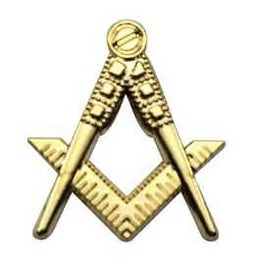
The operative symbolism of the lodge is more than just an initiatory language. It is a system of implicit requirements. The square does not say 'be good' – it says 'be just'. The compass does not say 'be charitable' – it says 'know how to contain'. The Masonic moral tool does not prescribe anything ; rather, it provides powerful guidance.

Operative symbols embody morality
Every symbol in the lodge has an ethical meaning before it has a decorative one. The gavel represents firmness without violence. The chisel evokes precision without mutilation. The level reminds us of the fundamental equality between brothers and sisters, not out of social naivety, but out of a recognition of our shared humanity.
The entire temple is a representation of an ideal world, not as an escape from reality, but as an aspirational model of humanity that we are all called upon to embody in our own way in the secular world. Morality is not abstract ; it is expressed through gestures and the way we dress and present ourselves, and through respect for others.
The pillars are not erected to be seen, but to support the invisible structure of behaviour and relationships with oneself and others. The important thing is not to believe in symbols, but to embody them through practice until they become a moral code deeply rooted in our existence.
Fraternity : neither comfortable nor lukewarm.
Masonic fraternity is not a matter of choice. It is a ritual requirement. It requires us to live with others, to listen without approving and to support without taking a back seat. Being a brother or sister does not mean being complicit or indulgent. It means accepting that others may disturb us, challenge us or put us under pressure, as long as this is done with respect for the rite and the boundaries of correctness.
It is here that Masonic morality becomes more acute : it is not measured in grand principles, but in real, imperfect and often uncomfortable interactions. It is tested through discreet loyalty, silent presence and perseverance in relationships despite disagreements.
It teaches us that morality is not consensus, but rather the bond that is maintained despite differences. It reconciles disagreement with union and divergence with fidelity. In our fragmented world, this is perhaps one of its greatest lessons.
Silence, secrecy and restraint : a morality of withdrawal.
Masonic secrecy is not withdrawal. Rather, it is a protection of ethical space. Silence is not a refusal to say anything ; it is a choice not to say everything in any old way. Masonry teaches an ethic of active withdrawal, which is the opposite of the contemporary world, where everything must be displayed, articulated, explained and justified.
This restraint is an inner discipline. It teaches us not to impose our certainties on others, not to use truth as an instrument, and to respect the mystery experienced by others. In today's world, this is perhaps one of the most moral gestures there is.
Kant in the Temple
If we seek a point of reference within the philosophical tradition, Immanuel Kant (1724–1804) undoubtedly comes closest to this position. In The Critique of Practical Reason, he states: ‘Act solely according to the maxim that makes you able to will at the same time that it becomes a universal law’.

Immanuel Kant
This autonomous inner law, the categorical imperative, finds a discreet yet profound echo in the Masonic approach. While Kant speaks of pure reason, Masonry invokes lived symbolism. While the philosopher establishes a structure, the lodge conducts an experiment. Freemasons are called upon to search within themselves for what might apply to everyone, not through abstraction, but through a shared, ritualised inner experience.
Is the square, a symbol of rectitude, not the tangible embodiment of this requirement ? And is the compass, with its ability to measure, not an image of a morality that creates fair boundaries without excluding or dominating ? Without saying so, Masonic morality silently inhabits Kant.
A Christian heritage, transformed but still present
We cannot ignore the fact that Masonic morality is rooted in a historical culture shaped by Western Christianity. Concepts such as the inner law, universal brotherhood, voluntary sacrifice and conversion are not rejected by Freemasonry, but rather sublimated by removing them from the realm of dogma.
Charity becomes brotherhood without confession. Salvation becomes symbolic elevation. Sin becomes an imperfection to be refined, rather than a fault to be atoned for. Grace becomes an inner light — a light that Freemasons receive, seek out, and eventually embody through the righteousness of their actions.
This is not a betrayal of Christianity, but rather a secular and symbolic transfiguration of its tenets. Freemasonry is not hostile to faith ; it offers an alternative way of addressing ethical issues, in which individuals are accountable to themselves, their fellow Freemasons, and the ideals they claim to serve.

Weighing words as a moral act
In the Temple, speech is rare. It does not flow freely. It is refined. Every utterance is binding. It is ritualised, measured and directed. This is precisely what makes it a moral act.
Masonic morality lies in the moment when we speak to build, not to show off. In this moment, when silence is full of fertile tension rather than being empty, the Freemason learns to speak justly, to listen attentively and to be present in silence.
It is an exercise in the responsibility of speech in a world that is often saturated with it, devoid of it, and overused. This discipline, which some consider outdated, is in fact radically contemporary. It shapes a man who thinks before he speaks, respects silence as an ethical space and understands that every word is a symbolic commitment.
Against Moralism : The Humility of the Worksite
Freemasonry does not respond to the moral imperatives of the secular world by making grand statements. It refuses to become a vehicle for public lessons. Rather than dictating what is good, it enables everyone to seek it within themselves. When it talks too much, it betrays itself. When it seeks to shine, it goes astray. When it aligns itself with the slogans of the moment, it abandons its silent verticality.
If Masonic morality exists, it is inherently anti-spectacular. It doesn't seek to convince anyone. Rather, it seeks to empower individuals to discover their own truths through introspection, self-doubt, and presence.
It is not reactionary. It does not judge according to tendency, but according to the stability of the heart. It does not change course with every outrage. It forges an invisible path, profoundly human, but directed upwards.
As a final stone
Yes, there is a Masonic morality. But it cannot be proclaimed. It is carved, polished and tested. It is not a system. It is a path.

A path to the light
It does not promise happiness. Rather, it offers a framework for seeking the right thing. It is made up of restrained gestures, chosen words and experienced silences.
It is not imposed. It permeates. It does not judge. Rather, it calls on you to judge yourself. Above all, it never flatters. It exerts silent pressure.
It begins when a man stops lying to himself. It takes shape when the Freemason acknowledges that he does not know everything.
Sometimes it is achieved in an unspoken word, a steady gaze or a silence that contains a lifetime's work.


I WANT TO RECEIVE NEWS AND EXCLUSIVES!
Keep up to date with new blog posts, news and Nos Colonnes promotions.
